Author: Peter Tian

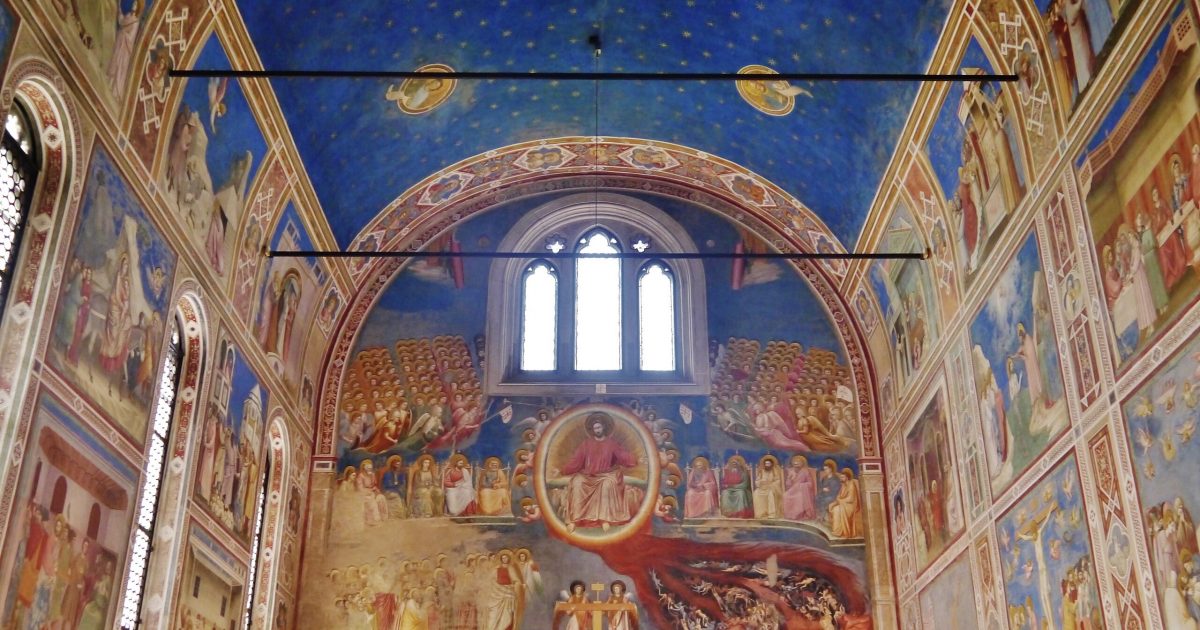
The Arena Chapel, located in Padua, Italy, was the private chapel of the Scrovegni family, a wealthy family of bankers. It is situated next to the family palace. Enrico Scrovegni funded the decoration of this structure to atone for the sin of usury committed by both his father and himself. Usury, which means charging interest on loans, was considered a grave sin that could lead to damnation. However, it was also a fundamental practice in banking at that time.
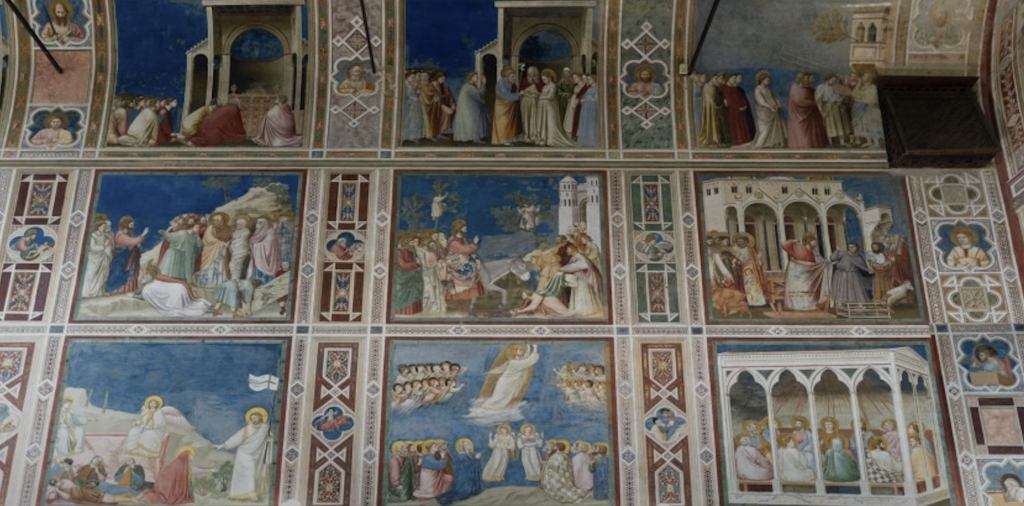
The chapel is adorned with frescoes, arranged in registers. Three registers of images narrate a continuous story:
The first register: The lives of Christ’s grandparents, Joachim and Anne, as well as the life of the Virgin Mary.
The second register: The life of Christ.
The third register: The Passion, depicting the final moments of Christ’s life.
There is also a fourth register below. Although it does not depict a narrative sequence, it contains intricate details, particularly in The Last Judgment, which I will discuss later.
Four Important Paintings in the Chapel
I. The Annunciation
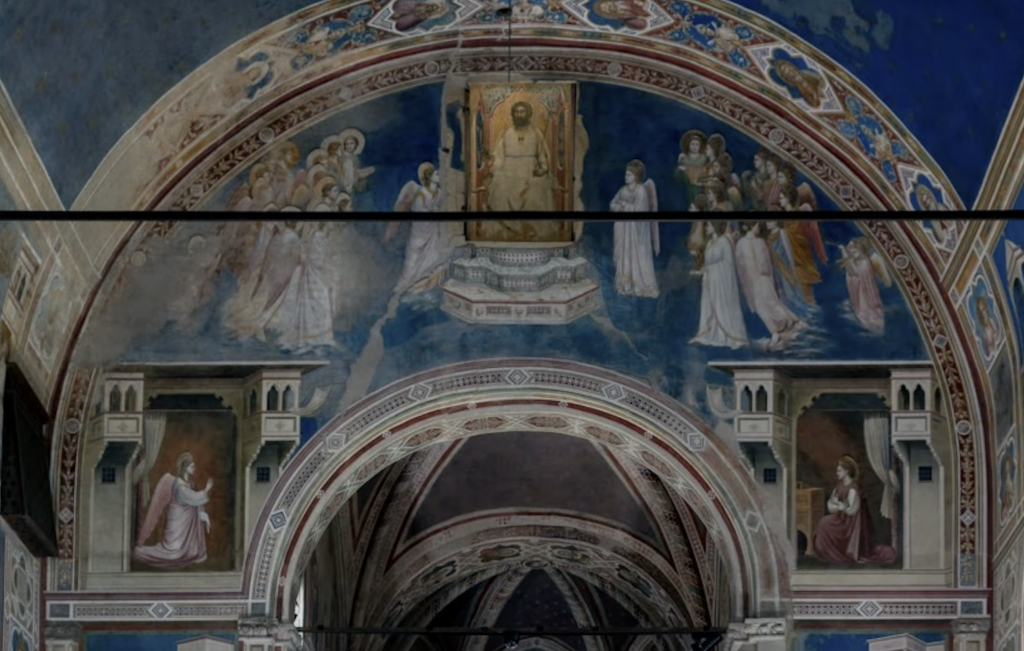
Upon entering the chapel, you will see The Annunciation painting by slightly raising your head. At the apex of the triumphal arch, God calls the archangel Gabriel and assigns him the task of announcing to the Virgin Mary that she will bear the Son of God, the Savior.
On the lower left and right sides, Gabriel and Mary are depicted kneeling in architectural settings, creating a convincing sense of space. The drapery of Gabriel is rendered with remarkable realism, reflecting the influence of Realism. This artistic choice supports the idea that the Late Gothic period, when the chapel was built, was a transitional phase leading to the Renaissance. However, the depiction of God on a panel remains more conservative in style.
II. The Kiss of Judas (The Arrest of Christ)
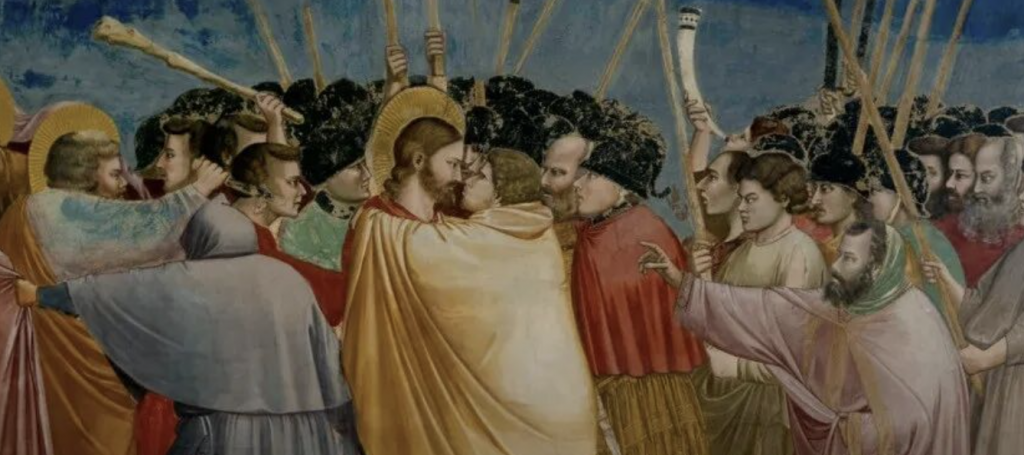
The New Testament records that Judas identified Jesus with a kiss. Matthew 26:48-49 states, “Now the betrayer had arranged a signal with them: ‘The one I kiss is the man; arrest him.’ Going at once to Jesus, Judas said, ‘Greetings, Rabbi!’ and kissed him.” This detail provided the artist with a clear visual cue to depict the kiss as an unmistakable act of betrayal.
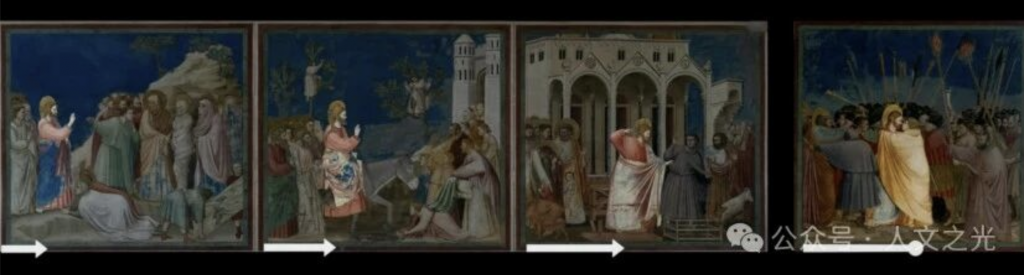
In previous frescoes, Christ is always shown in profile, moving forward through the narrative. However, in this scene, Judas embraces Christ, halting His movement—symbolizing the betrayal that leads to His death.
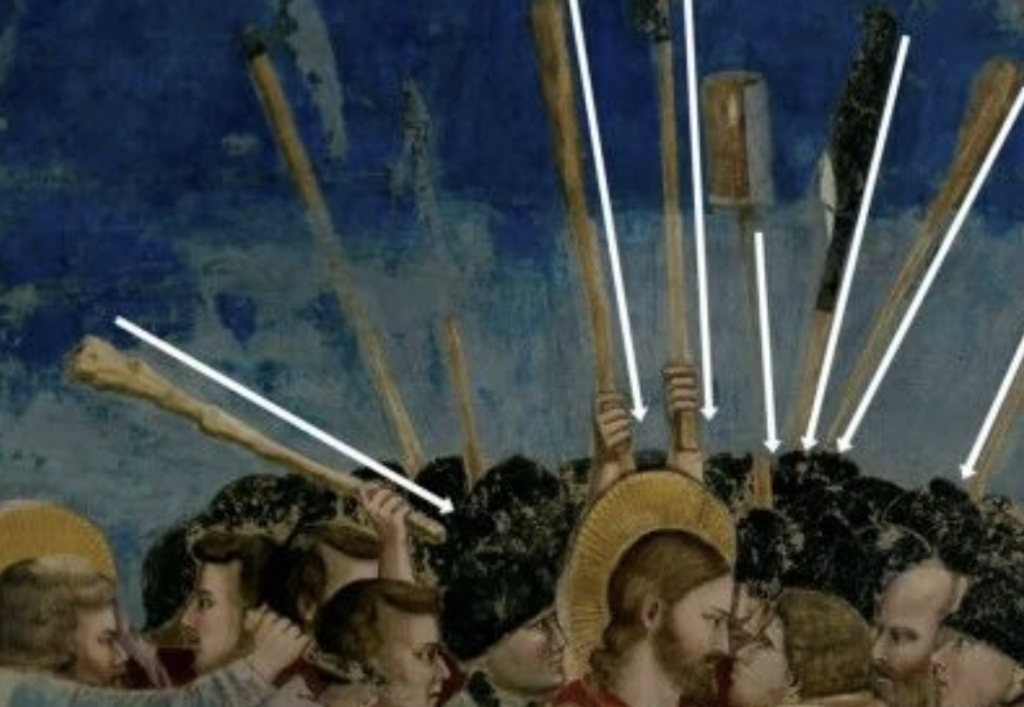
Additionally, the weapons held by the surrounding figures create an atmosphere of chaos, emphasizing the danger Christ faces. The apostle Peter cutting off the ear of the high priest’s servant further adds to the sense of violence in the scene.
III. The Lamentation
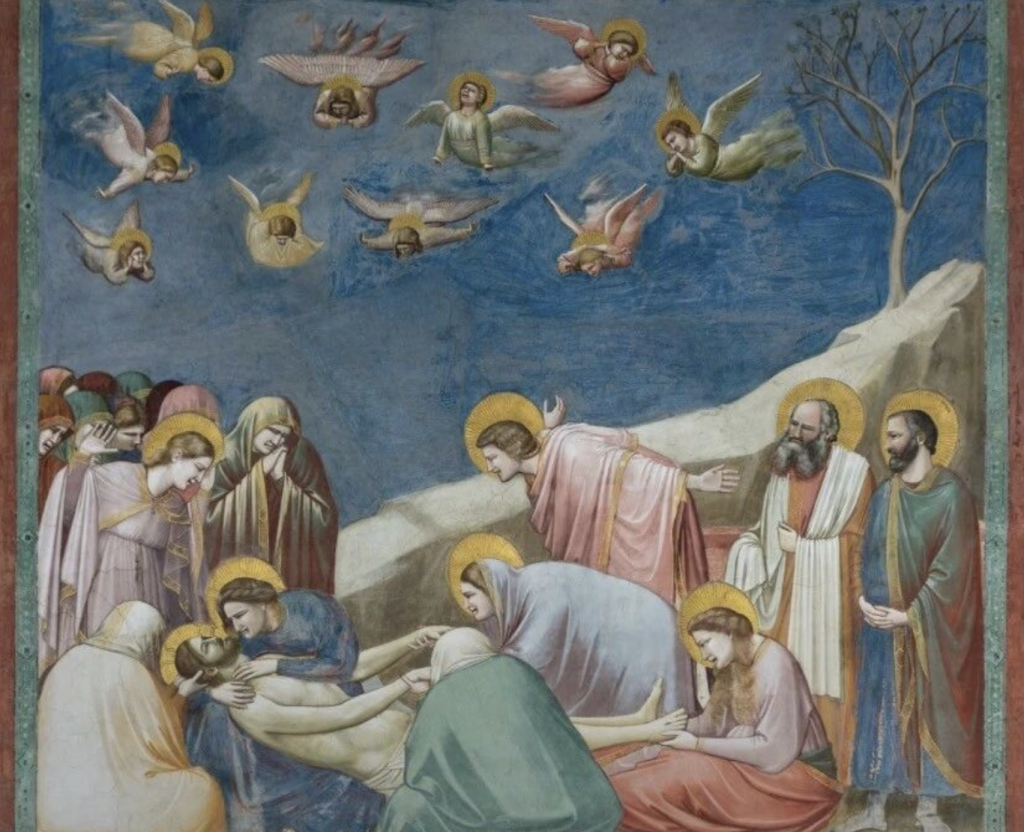
Although the four Gospels do not provide a detailed description of Jesus’ mourning, the Gospel of John mentions Mary, the mother of Jesus, Mary Magdalene, and others standing at the foot of the cross (John 19:25-27). The theological significance of this scene is to emphasize Christ’s humanity—His death evokes real human emotions such as grief, love, and hope. Mourning is not only an expression of sorrow but also a prelude to Christ’s resurrection. His body is often depicted as peaceful and sacred, symbolizing the fulfillment of His sacrifice and redemption.
This painting explicitly conveys sadness, with the artist using refined brushstrokes to depict the varied emotions of each figure. Individuality is emphasized, as different people react in different ways.
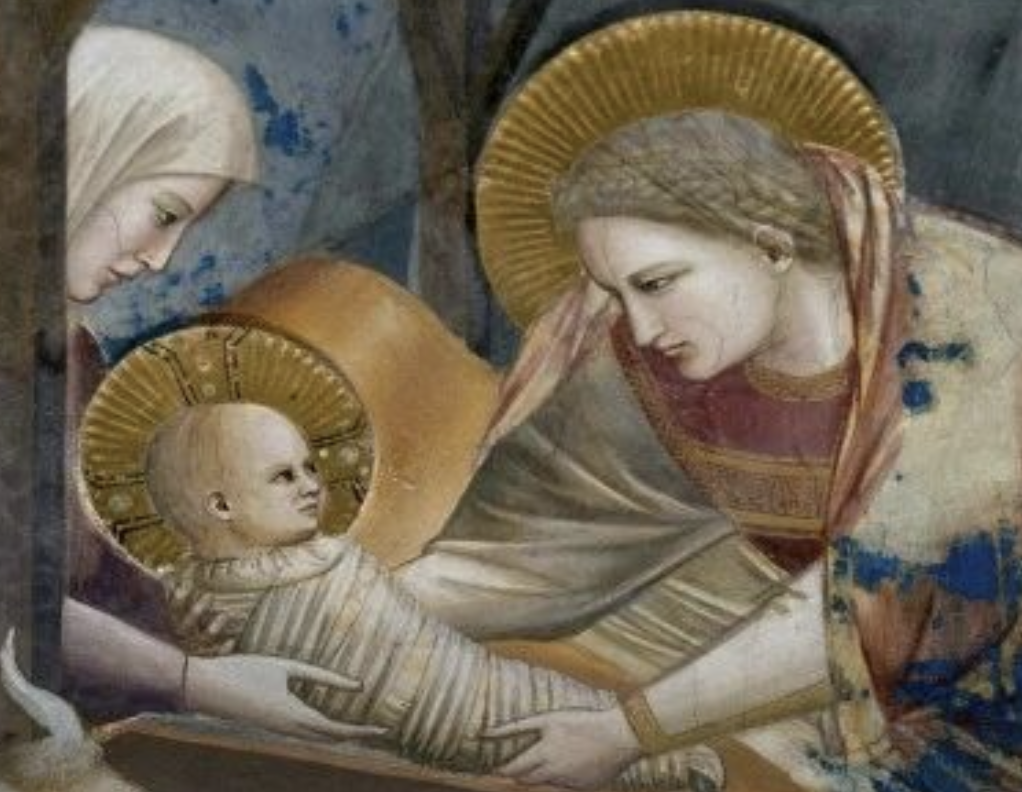
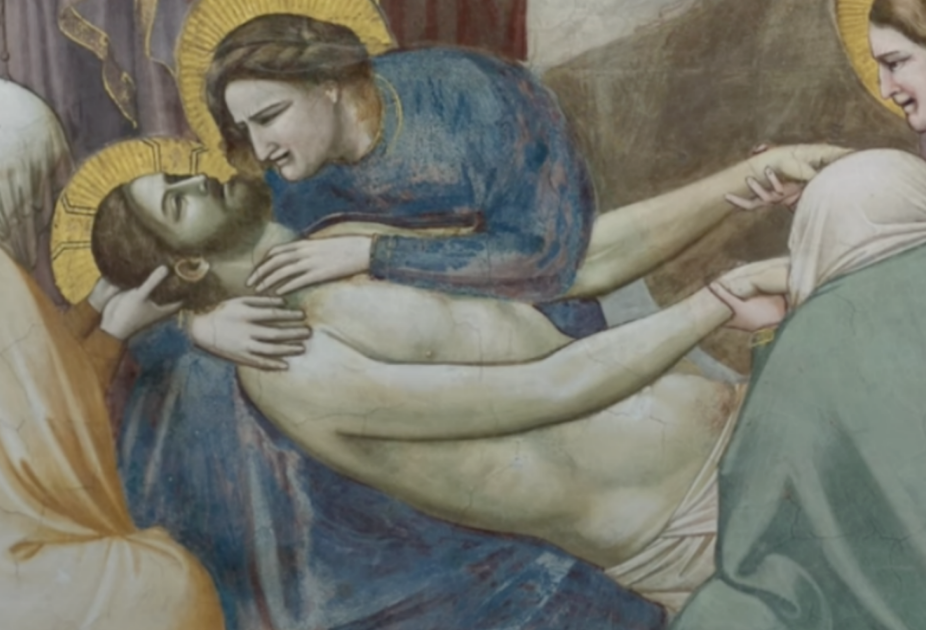
Mary, bending forward, holds her son in extreme sorrow and disbelief. This moment recalls an earlier fresco in which Mary cradles the infant Christ—but now, she holds her deceased adult son.
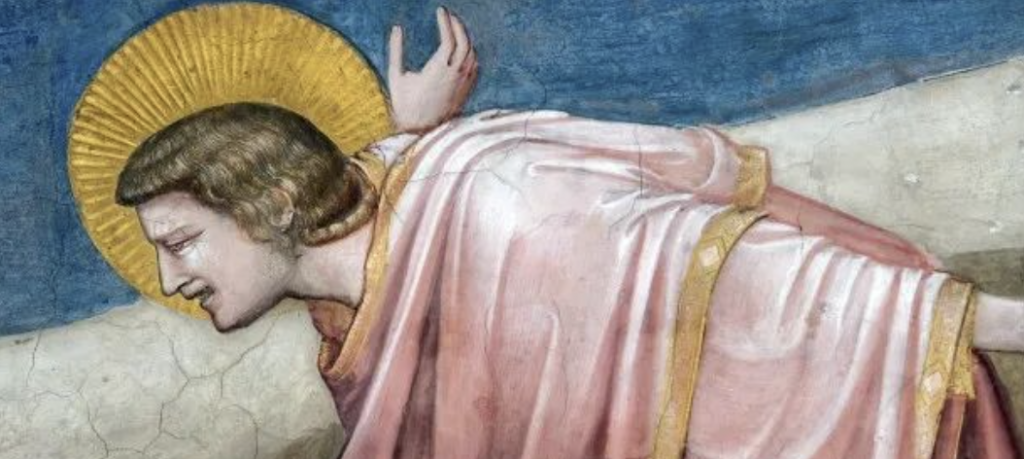
Some figures grieve in solitude, while others throw their arms into the air and wail. Regardless of their response, the intense emotion is unmistakable.
IV. The Last Judgment
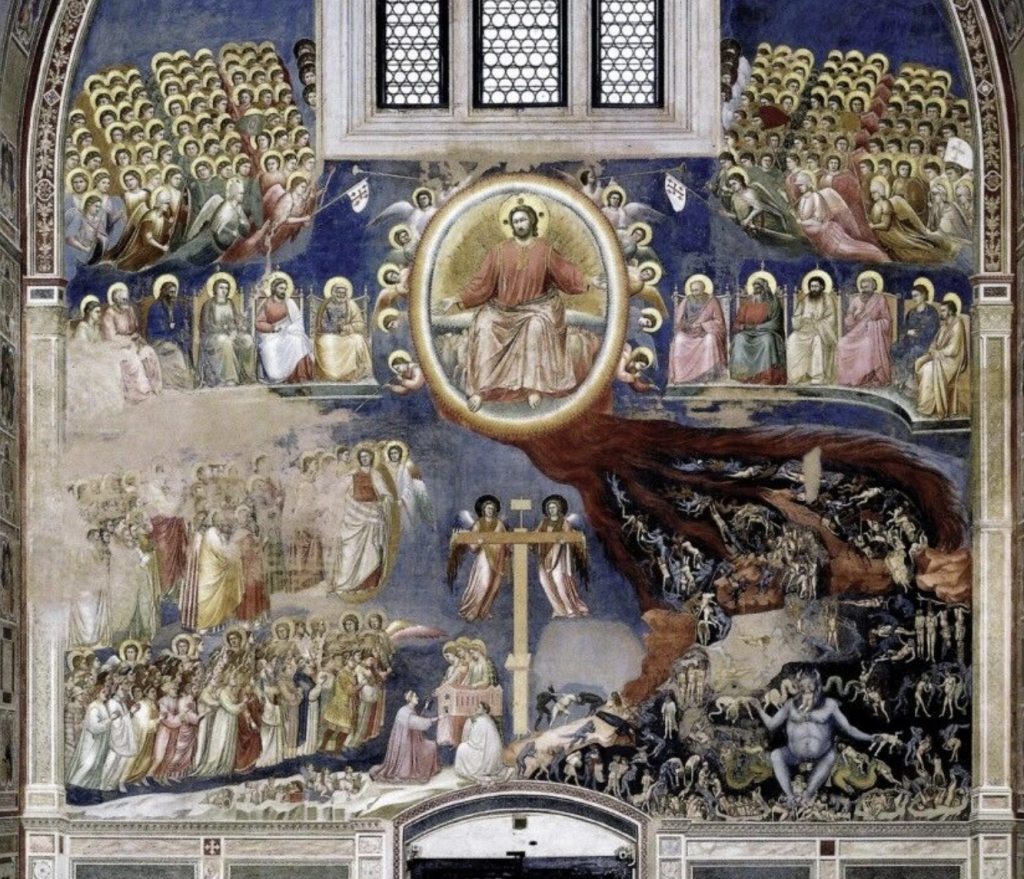
The fresco of The Last Judgment is located above the chapel’s entrance, following a classical composition. A large cross divides the scene into three sections: the lower left, the lower right, and the upper
The Lower Left
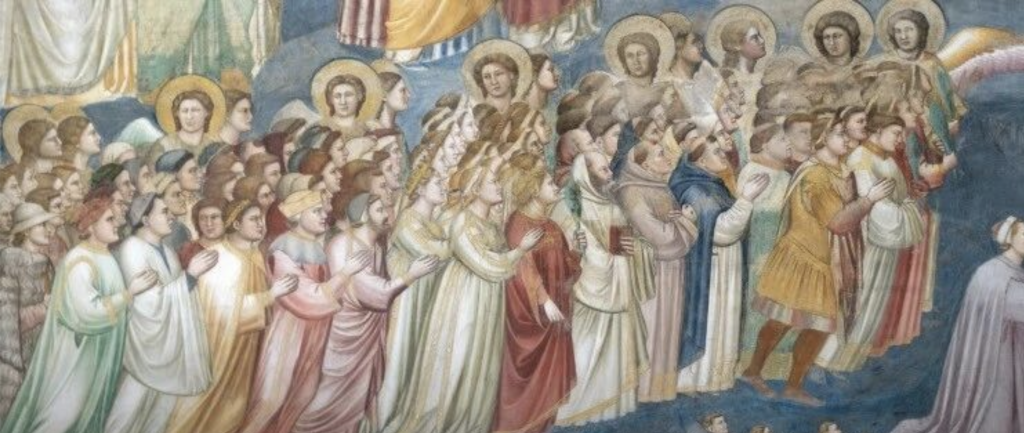
This section depicts the blessed, who gaze at Christ in the center. Their feet rise from the ground, symbolizing their ascent to heaven, as angels gently guide them toward their final destination. Enrico Scrovegni, the patron of this chapel, faithfully knelt in front of the three Mary, presented the chapel to them.
The Lower Right
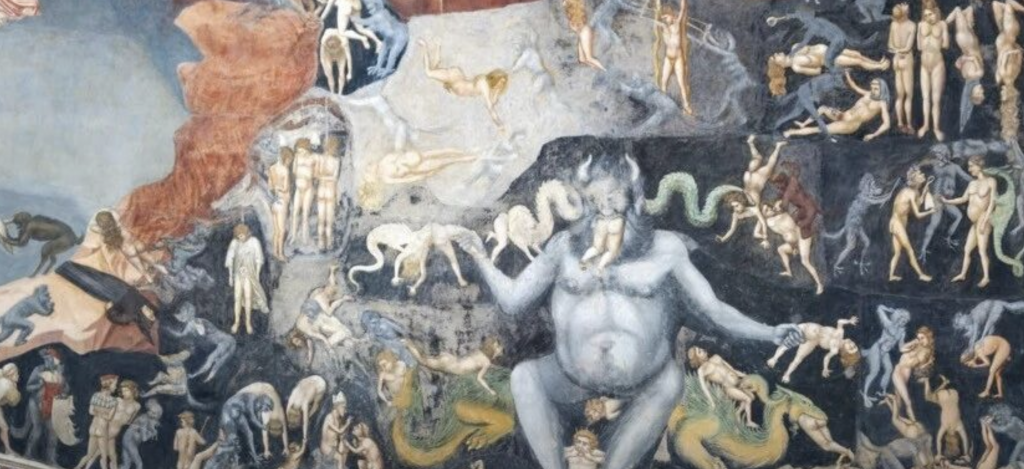
This side represents hell, dominated by a large blue figure—Satan, the devil. Countless souls are shown being tortured. Notably, the punishment for usurers is depicted as hanging by a money bag. Nearby, Judas, the traitor of Christ, is also portrayed.
The Upper Area
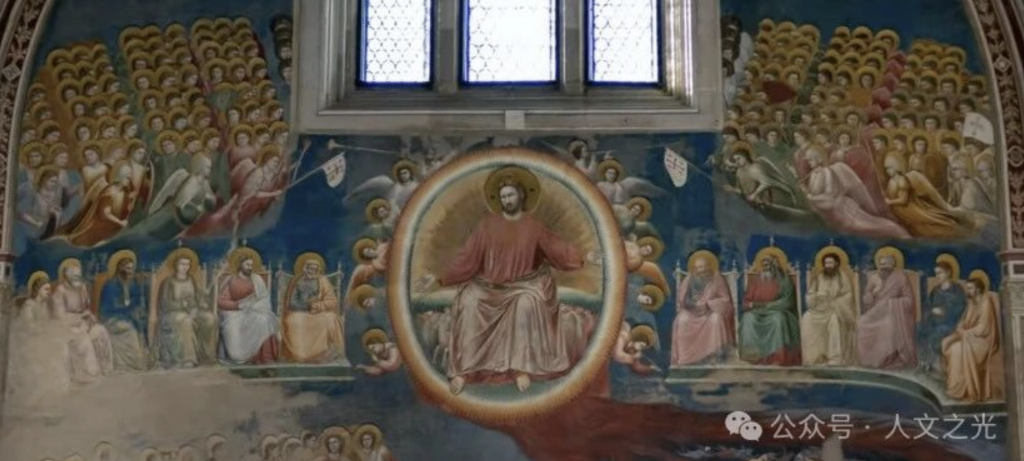
Heaven is depicted here, with Christ seated in the center, surrounded by the twelve apostles.
The Forth Register
At the very bottom of the whole chapel, which is considered as the forth register, several small figures represent personifications of virtues and vices.
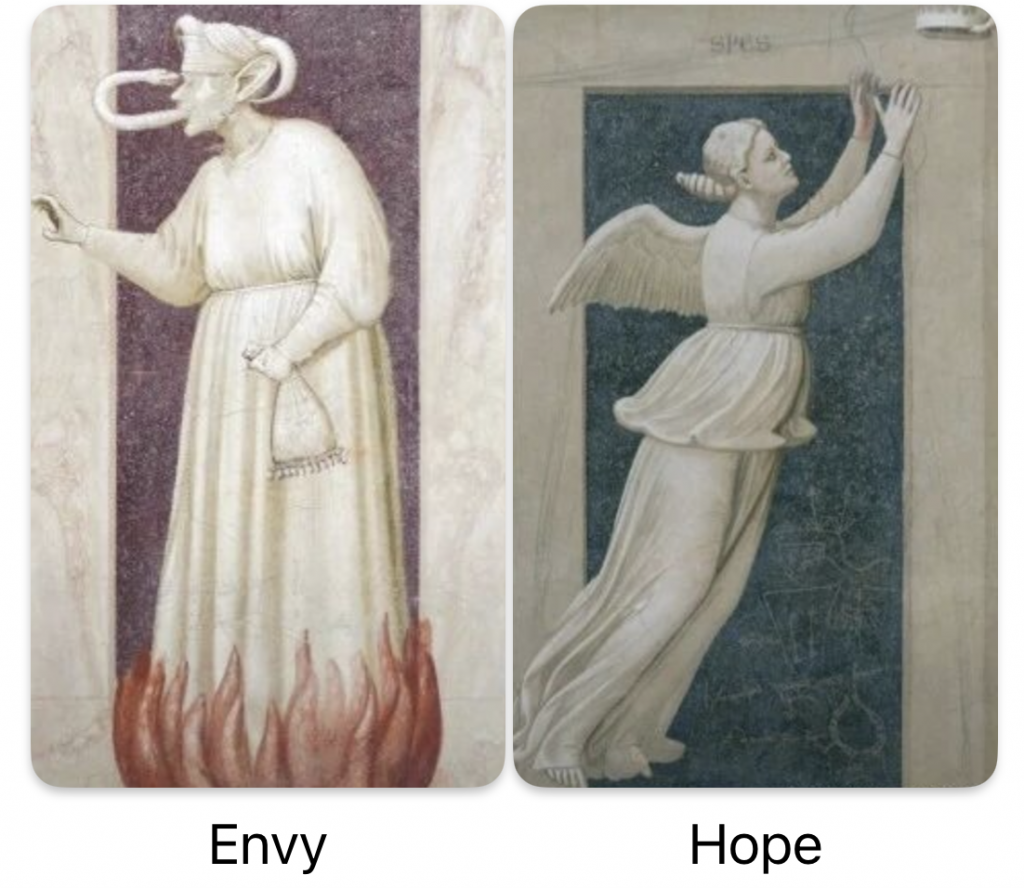
The personification of Envy is engulfed in flames, symbolizing her punishment in hell. One of her hands clutches a bag of money while the other reaches for more. Her elongated ears indicate that she listens for what she desires but cannot have, while her eyes, transformed into snakes, represent self-destructive greed.
The virtue of Hope is depicted as a figure being lifted toward the blessed souls ascending to heaven. The artist successfully visualizes the concept of hope through movement and composition.
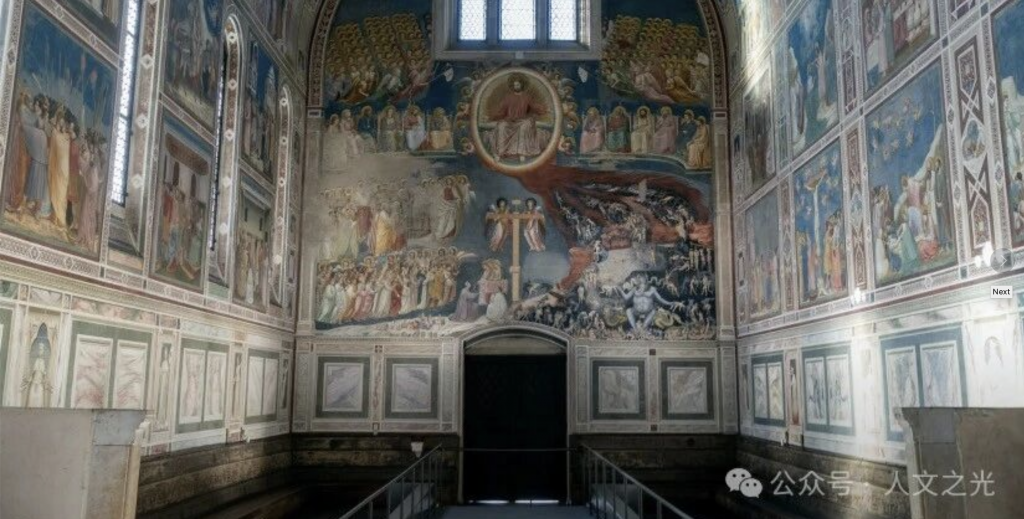
As people finish their prayers and step back into the world—a world filled with desire and sin—the fresco of The Last Judgment serves as a powerful reminder: the fate of one’s soul is determined by their choices in life.
发表回复