Author: Mike Han, The Hi-Storyteller Humanities and History Club (2024-2025) of Beijing No.2 Middle School International Division
Introduction
Under the ginkgo trees at the site of Xichun Garden in Tsinghua University, when we gaze upon the surviving stone carvings of the Forty Scenic Views from the ruins of Yuanmingyuan, fragments of civilization torn by war still whisper the spiritual code of a nation. The artifacts encountered in museum studies are not lifeless objects but carriers of the genetic legacy of Chinese civilization. From the architectural ingenuity of the Three Hills and Five Gardens (三山五园) to the ritual ethos embodied in bronze ceremonial vessels, from the cosmological beliefs carved into ancient jade to the cross-civilizational dialogues reflected in porcelain evolution, material remains and spiritual traditions have always resonated across temporal and spatial boundaries.
I. The Civilizational Blueprint in Garden Narratives
The construction history of the Old Summer Palace complex fundamentally manifests a civilization-building process. Kangxi transformed the Changchun Garden into a knowledge production hub by establishing the Mengyangzhai Academy. Yongzheng’s nomenclature “Yuanming” (Perfect Brightness) for his imperial retreat embodied cosmic and earthly philosophical pursuits. Qianlong’s replication of Western-style palaces in the Changchun Garden demonstrated intercivilizational dialogue. Within the Three Hills and Five Gardens system, Jingyi Garden derived its name from the admonition against hypocrisy in the Book of Documents, while the Yuquan Mountain complex in Jingming Garden followed cosmological principles of Four Symbols and Five Elements. This spatial configuration consistently actualized the traditional Chinese paradigm of heaven-humanity unity through architectural epistemology.
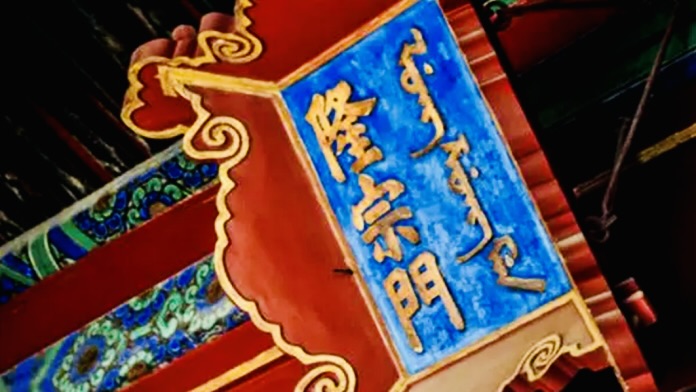
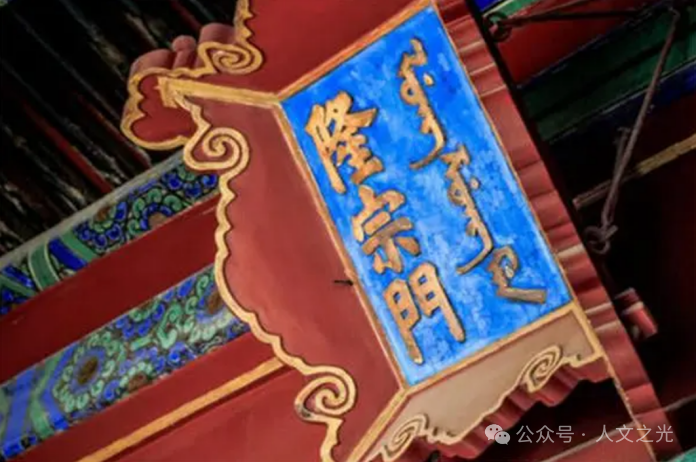
The stone remnants of Xichun Garden within Tsinghua University campus reveal stylistic connections between the intertwined lotus motifs on Sumeru pedestals and archaic bronze coiled serpent patterns. The Manchu-Chinese bilingual inscriptions on Enmu Temple’s mountain gate tablet outside Peking University’s west gate epitomize multicultural integration. When Emperor Jin Zhangzong constructed the Eight Great Water Palaces in Fragrant Hills, his artistic lineage inherited from Emperor Huizong of Song manifested living continuity of civilizational inheritance. These material vestiges collectively form a three-dimensional cipher for decoding Chinese civilization’s unbroken lineage through architectural semiotics.
II. The Ritual Cipher in Bronze Treasures
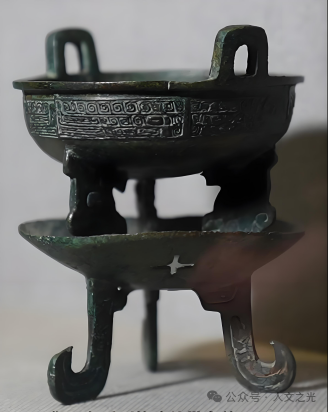
The 1,928 artifacts unearthed from Fu Hao’s tomb at Yinxu in Anyang not only materialize Shang ritual systems but also narrate the military legend of Queen Fu Hao under King Wu Ding. The “Gui-footed Ding with Tray” housed in Baoji Bronze Museum, serving as a Western Zhou food-sharing vessel, reveals early dining protocols through its partitioned structure. Contemporary practices like separate dining and communal utensils, though seemingly mundane, embody social civility – a civilizational continuum traceable to Zhou’s 3,000-year-old food-sharing customs that represent the cultural genesis of Chinese gastronomy. Gansu Provincial Museum’s Bronze Galloping Horse transcends Han equestrian norms through its dynamic suspension design, where the hoof-treading bird simultaneously visualizes kinetic energy and materializes the ideological construct of “celestial steeds from western realms”. When Song scholars transcribed bronzes into the Xuanhe Bogutu (Illustrated Catalogue of Antiques), they were reconstructing classical cognitive systems through antiquarian research. These bronze relics collectively map the techno-spiritual matrix of Chinese ritual-music civilization.
III. Celestial Faiths in Jade Carving
The 755 jade artifacts unearthed from Fu Hao’s tomb form a complete ritual system: thecong’s inner circle and outer square embody the “round heaven, square earth” cosmology, while the ceremonial evolution of jade ge daggers records civilization’s progression “from weapons to jade silks.” The National Museum’s Shang-dynasty jade phoenix, with its 0.2mm precision openwork and S-curve silhouette, echoes the Book of Changes concept of “curved completeness.”
Warring States jades from Marquis Yi’s tomb reveal Fibonacci-sequence grain patterns, proving ancient mastery of the golden ratio. Emperor Qianlong’s 487 inscribed poems transformed jade appreciation into cultural hermeneutics. The Palace Museum’s “Lady Under Phoenix Tree” jade boulder brilliantly incorporates flaws into its composition—a “clever craftsmanship” tradition traceable to Hongshan culture’s “color-utilizing” techniques. From Liangzhucong’s divine authority to Han jade burial suits’ pursuit of immortality, jade remained China’s primordial medium between earth and heaven.
IV. Civilizational Dialogues Forged in Kiln Flames
The “plum-green” glaze of Longquan celadon inspired European “Celadon” worship, with its crackled patterns immortalized in Dante’sParadiso. Changsha ware’s Arabic inscriptions on brown-glazed ceramics document cultural encounters along the Maritime Silk Road. The evolution of green-glazed “tiger chamber pots” into modern sanitary ware mirrors the logical progression of material civilization.
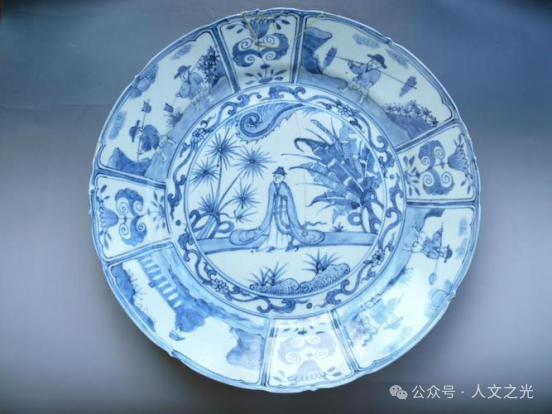
Ru ware’s “sky-clearing-after-rain” hue transcends chromatic aesthetics to materialize Song literati’s cosmological vision. Yuan-dynasty Jingdezhen blue-and-white, colored with Persian cobalt pigments, integrated Central Asian aesthetics into China’s ceramic DNA, while Wanli export porcelains bearing tulip motifs testified to early globalization’s cultural translations. These kiln-fired masterpieces crystallize millennia of cross-civilizational dialogue.
Epilogue: The Palimpsest of Civilization
Upon the marble foundations of Yuanmingyuan’s Haiyue Kaijin ruins, the erosions of time merge with bronze patinas, jade lusters, and ceramic crackles to form civilization’s growth rings. From the architectural intelligence of the Three Hills and Five Gardens to the national treasures in museum halls, material heritage perpetually fulfills its dual mandate: preserving past glories while continuously supplying genetic blueprints for cultural innovation. As we contemplate the Warring States jade bi in Tsinghua University’s art museum, that trans-temporal dialogue persists—each epoch must decode new civilizational potentialities from ancient DNA.
References
1.Wang Fu (Song Dynasty), 1123. Xuanhe Bogu Tu [Illustrated Catalogue of Antiques from the Xuanhe Era]. Hangzhou: Imperial Edition of the Song Court.
(Supports the analysis of bronze ornamentation and ritual systems)
2.Chang, Kwang-chih, 1983. Zhongguo Gudai Qingtongqi Jishu Yanjiu [Technological Studies of Ancient Chinese Bronzes]. Beijing: Cultural Relics Press.
(Provides evidence for Shang-Zhou bronze casting techniques and ritual evolution)
3.The Palace Museum (ed.), 2015. Qianlong Yuzhi Wenwu Tiba Quanji [Complete Collection of Emperor Qianlong’s Inscriptions on Antiquities]. Beijing: Forbidden City Publishing House.
(Documents Qing emperors’ cultural interpretations of jade artifacts)
4.Gansu Provincial Institute of Cultural Relics and Archaeology, 2001. “Excavation Report of the Leitai Han Tomb in Wuwei.” Kaogu Xuebao [Acta Archaeologica Sinica], no. 3.
(Contains archaeological analysis of the Galloping Bronze Horse)
5.Li, Zhiyan, 1998. Zhongguo Taoci Shi [History of Chinese Ceramics]. Taipei: The Commercial Press.
(Demonstrates Changsha kiln’s role in cultural exchange)
6.Institute of Archaeology, Chinese Academy of Social Sciences, 1980. Yinxu Fuhao Mu [The Tomb of Fu Hao at Yinxu]. Beijing: Cultural Relics Press.
(Provides archaeological evidence of Shang jade ritual systems)
7.Hou, Renzhi, 2000. Beijing Lishi Ditu Ji [Historical Atlas of Beijing]. Beijing: Beijing Publishing House.
(Substantiates the spatial philosophy of Three Hills and Five Gardens)