Author:F.L. from InkAndIron, Beijing SDSZ International Department
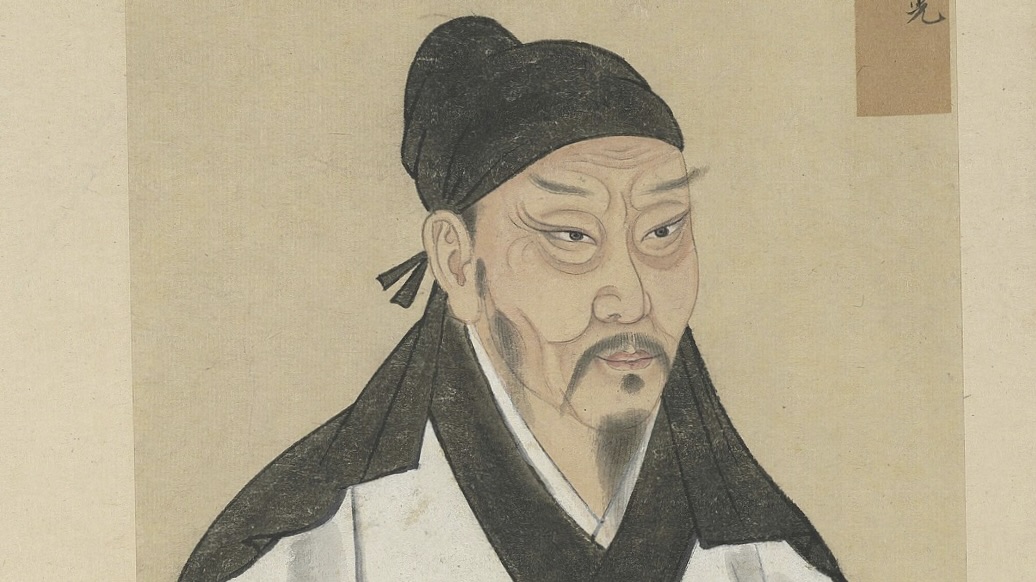
My first impression of Sima Guang came from If This Were Song History (《如果这是宋史》) by Gaotian Liuyun. This exceedingly long work—ten volumes in total, with seven devoted to the Northern Song and three to the Southern Song—offers highly detailed depictions of many events and provided me, who read the entire series nearly ten times, with a comparatively solid grounding in the historical facts. However, as a work of history, it suffers from a serious flaw: the author interweaves far too many subjective judgments, and the selection of sources largely serves to support his own arguments. From the content of the book, it is not difficult to discern that Gaotian Liuyun strongly supports Wang Anshi’s reforms. Consequently, he employs every possible means to denigrate Sima Guang and the Yuanyou Restoration. This, in turn, caused me—at that time lacking sufficient reading experience—to feel a pronounced aversion toward Sima Guang.
This aversion stemmed primarily from Sima’s adamant defense of the “laws of the ancestors” (祖宗之法), as well as from his seemingly outrageous statements such as:
“It was not only the Han who erred. Had the rulers of the Three Dynasties always adhered to the laws of Yu, Tang, Wen, and Wu, their states would still exist today. Emperor Wu of Han altered the restraints of Gaozu and turmoil spread across half the empire; Emperor Yuan changed the governance of Emperor Xuan and the Han dynasty declined. This demonstrates that the laws of the ancestors must not be changed.”[1]
Equally disturbing to me were his inclination toward capitulation and territorial concession at the beginning of the Yuanyou Restoration. The clearest example is found in his memorial “Request to Abolish the Baojia System,” submitted in the fourth month of the eighth year of Yuanfeng:
“The peoples of the Rong and Di make riding and archery their profession and warfare their custom. From youth to maturity they have no other occupation. The people of China, however, are born into peace and devote themselves to farming; even if armed and taught to thrust and strike, and even if they appear well-drilled in the training grounds, once they meet the Rong and Di in real combat—when the drums thunder and arrows first fly—they will certainly flee in panic. Their defeat may be predicted in advance without any doubt.”[2]
In addition, during his brief tenure as chief councilor, he advocated a policy of territorial abandonment—specifically, the unconditional return of Lanzhou and four fortresses of the Yongxingjun Circuit to the Western Xia.[3] Even now, I remain unable to comprehend why Sima Guang adhered to such an extreme pacifist position in military affairs. Yet with regard to his political principles, I have come to a different understanding after reading works by Professor Deng Xiaonan and her student Professor Fang Chengfeng.
Professor Deng points out that as early as the Han dynasty, ministers were already invoking “ancient practices of the ancestors”[4] and “old institutions of the Han house”[5] to admonish the ruler’s conduct. The expression “laws of the ancestors” (祖宗之法) first appears, at the latest, during the reign of Emperor Suzong in the Tang (756–762). After the turbulence and horror of the late Tang and the Five Dynasties—an era in which “people devoured one another”—the founding emperors Taizu and Taizong of the Song, along with their ministers, regarded “seeking stability” and “preventing abuses” as matters of paramount importance. For them, internal strife was far more terrifying than foreign threats. Thus, most early Song institutions were built upon the fundamental principle of “creating regulations to prevent future problems” (事为之防,曲为之制).[6]
By the reign of Emperor Zhenzong (997–1022), this doctrine had become firmly established. In his accession edict, Zhenzong declared: “All governmental affairs of the Former Reign have established regulations; we must abide by them and dare not neglect them.” This clearly echoed his father’s views. As the first monarch of the Song to inherit a stable realm rather than found it, Zhenzong believed his duty was to preserve and build upon the achievements of his father and uncle. His governing style—aside from his grand ritual projects at Dongshu and Xishu, which themselves carried political significance—tended toward caution. During this period, he “consulted almost constantly the precedents of the Han and Tang and the established statutes of the Song; in word and deed he conveyed the prudence of a ruler safeguarding what had been handed down.”[7] The sacralization and veneration of the “laws of the ancestors” among the Song scholar-officials may be traced to this era.
By the time the energetic Shenzong (1048–1085) ascended the throne, more than seventy years had passed, and this intellectual inertia could not be easily overturned. For a historian such as Sima Guang, it was all the more entrenched. When Shenzong took power, Sima was already past fifty and had developed a mature political philosophy of his own. His decades-long political career demonstrate that he was by no means timid or overly conservative—for instance, in the Renzong reign he remonstrated by invoking Tang precedents to compel Renzong to appoint a crown prince[8], and in Yingzong’s reign he opposed the Poyu dispute.
In Sima Guang’s view, the Song of his day was a flourishing empire. Thus he did not emphasize the need for radical reform to correct systemic deficiencies; instead, he focused on how to preserve and extend its prosperity.[9] From this perspective, Sima’s starting point for “seeking change” differed profoundly from that of the Qingli Reforms or Wang Anshi’s New Policies.
During the Renzong reign, Sima categorized the essential virtues of a ruler into three: benevolence, clarity, and martial vigor.[10] Renzong’s benevolence, unparalleled in the imperial history of China, required no further comment. Yet in both clarity and martial vigor he was lacking:
“In matters great and small, he was overly modest and indecisive, delegating everything to his ministers…”[11]
Thus at that time Sima believed that an energetic and vigorous ruler was the foremost necessity. However, during the Yingzong reign (1063–1067), after the significant political crisis of the Poyu controversy, Sima encountered a new problem: if the ruler possessed the desire to act but was obstinately self-willed (as Yingzong was), how could he be persuaded to follow what Sima considered the correct Way of Kingship?[12] By the Shenzong reign, Sima therefore added another crucial element to his political philosophy: broadening avenues for remonstrance and dissent.
As he argued in his memorial of Xining 2 (1069), the political system is an organic structure in which the monarch is but one component. To maintain vitality within the system, the “dissenting voices” of the ministers were indispensable. His primary criticism of Wang Anshi’s reforms rested not only on substantive objections to the policies themselves, but also on the concentration of power in the hands of Shenzong and Wang Anshi. As he wrote in the same memorial:
“…Now, Your Majesty allows the great ministers to usurp the duties of the lesser ones (a reference to the establishment of the Policy Review Commission in Xining 2), and the lesser ministers to encroach on the offices of the greater ones. Thus the great ministers become dispirited and unwilling to give their full loyalty, while the lesser ministers shift responsibility upward and refuse to exert themselves. This is why the hundred officials are slack in their duties and myriad affairs are in decline.”
And as he further stated in “A Critique of Wang Anshi,” submitted in Xining 5:
“Now Your Majesty believes only the words of Anshi. If Anshi deems a man worthy, he is worthy; if he deems him foolish, he is foolish; if Anshi says something is right, it is right; if he says it is wrong, it is wrong. Those who flatter Anshi are said to be loyal and good; those who criticize him are deemed slanderous and wicked.”[13]
Despite the forcefulness of these criticisms, Sima exerted little influence over the political direction during Shenzong’s reign. Only after Shenzong’s death in the third month of Yuanfeng 8, with the beginning of the Yuanyou era, did circumstances change dramatically. Sima returned to central government, but his health had already deteriorated. Within a year—by the fourth month of Yuanyou 1—he was no longer able to attend court regularly and had to conduct discussions with fellow councilors at his residence. By the fifth month, the court even arranged a special rear gate so he could be carried in a sedan chair to imperial meetings.[14]
Even so, during the final year and a half of his life, Sima Guang continued to exert every effort to “improve” the state. In addition to the well-known abolition of the New Policies and his pursuit of peace with the Western Xia, he focused mainly on two tasks:
First, he recommended talented individuals such as Lü Hui, Cheng Hao, Su Shi, and Fan Chunren—figures who had dared to voice dissent during the New Policies period. Sima believed that appointing such people would help “broaden channels of remonstrance.” Later developments in the Yuanyou era confirmed the sharpness of his judgment. Yet Sima’s own almost pathological insistence on abolishing the New Policies ran counter to his broader ideals—an irony noted in contemporary anecdotes.[15]
Second, he worked to improve systems of recommendation and official selection. Building upon the examination reforms of Shenzong’s reign, he added a moral dimension and proposed his scheme of “Ten Categories for Selecting Scholars”:
– moral integrity suitable as a model for others;
– uprightness and steadfastness suitable for remonstrance;
– exceptional courage and intelligence suitable for command;
– fairness and acuity suitable for supervision;
– mastery of the classics suitable for lecturing;
– broad learning suitable for consultation;
– elegant writing suitable for authorship;
– skill in judicial matters suitable for adjudication;
– expertise in fiscal affairs suitable for revenue administration;
– familiarity with legal statutes suitable for handling appeals.[16]
For Sima Guang, abolishing the New Policies was merely a concrete governmental action; the principles guiding these actions were the product of decades of reflection since the Renzong and Yingzong reigns. Viewed individually, none of Sima’s political prescriptions seems particularly compelling. What is remarkable is that, despite the limited tools available in his “arsenal,” he persistently sought solutions to political dilemmas. In his later years, he believed that he had witnessed and understood the primary risks faced by an imperial dynasty and had found an effective remedy: an active ruler to maintain the vitality of the dynasty, and a group of virtuous, outspoken ministers to ensure—borrowing the metaphor from the debate between Chen Guan and Zhang Dun—that the “flat boat” of the Northern Song would proceed steadily without tilting.
Sima Guang was, above all, a historian. For a historian, no question is more important than how to prevent the decline of one’s own dynasty. This was the lifelong problem he strove to solve. Once his theory is properly understood, his rapid dismantling of the New Policies becomes much more intelligible. When asked whether abolishing the Xining reforms would create future troubles, he replied:
“If Heaven decrees longevity for the Song, such troubles will not occur.”[17]
Scholarly evaluations of Sima Guang have undergone a long evolution—from the largely negative judgments of Qian Mu’s generation to the more balanced assessments offered by scholars such as Fang Chengfeng today. This essay does not seek to “vindicate” Sima Guang. I remain, personally, a supporter of the New Policies; no amount of reading is likely to change this (laughs). Yet as my knowledge has gradually expanded, the black-and-white judgments of my earlier years have receded. Although Wang Anshi’s reforms strengthened central authority and increased state revenues, they also inflicted severe damage on the system of institutional checks and balances and the ethos of the scholar-official class.
When evaluating historical figures, nothing is more dangerous than adopting a “God’s-eye view.” To form a balanced appraisal of any individual, it is indispensable to situate oneself within the political culture and intellectual currents of their time.
References:
Deng, Xiaonan. The Law of the Ancestors: A Political Sketch of the Early Northern Song. (祖宗之法:北宋前期政治述略). Beijing: SDX Joint Publishing Company, n.d., p. 296.
“Edict of Accession of Emperor Taizong of the Song.” (宋太宗即位诏书).
Fang, Chengfeng. Various works on Sima Guang and Northern Song political thought.
Gaotian Liuyun. If This Were Song History (《如果这是宋史》). Multiple volumes.
Historical Sources
Hou Hanshu (后汉书), juan 43.
Songshi (宋史), juan 336, pp. 13336, 13645.
Sima Guang ji (《司马光集》),
– juan 18 and 19 (“Memorial on Five Principles”), pp. 536–549;
– juan 18, p. 527;
– juan 22, p. 606;
– juan 53 (“Memorial Requesting Discussions with Colleagues”), p. 1102;
– juan 53 (“Memorial on Selecting Scholars through Ten Categories”), p. 1064.
Song chao zhuchen zouyi (《宋朝诸臣奏议》), juan 115, p. 1255.
Chuanjia ji (《传家集》), juan 46.
Tie weishan cong tan (《铁围山丛谈》), juan 3, pp. 59–60.
Sun Gong tanpu (《孙公谈圃》), juan shang, p. 147. Recorded by Liu Yanshi.
Secondary Scholarship
Yan, Xiaojun. “A Study of ‘Gushi’ in the Two Han Dynasties.” (阎晓君:《两汉“故事”论考》). Chinese Historical Studies (《中国史研究》), no. 1 (2000): 29–36.