Opy
(This article’s author is from Bangladesh)
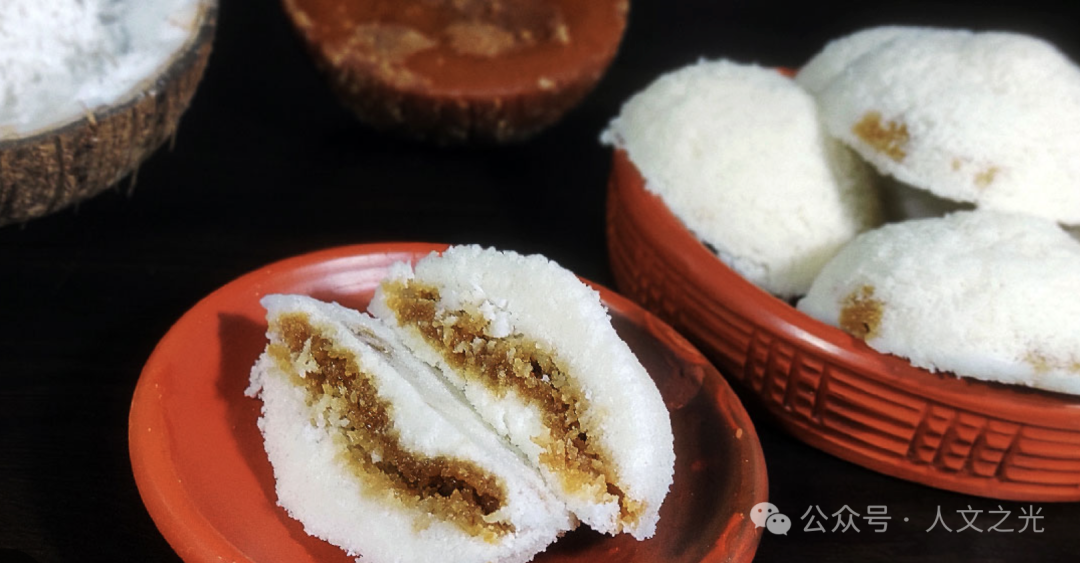
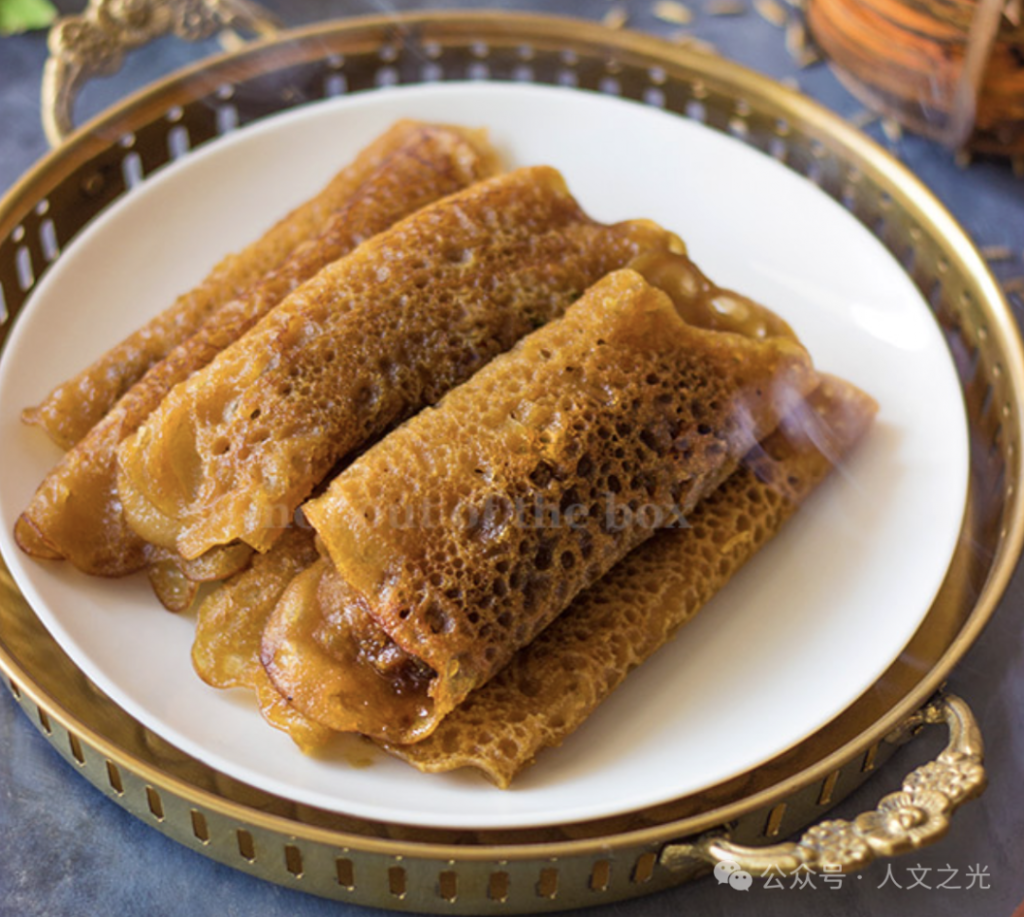
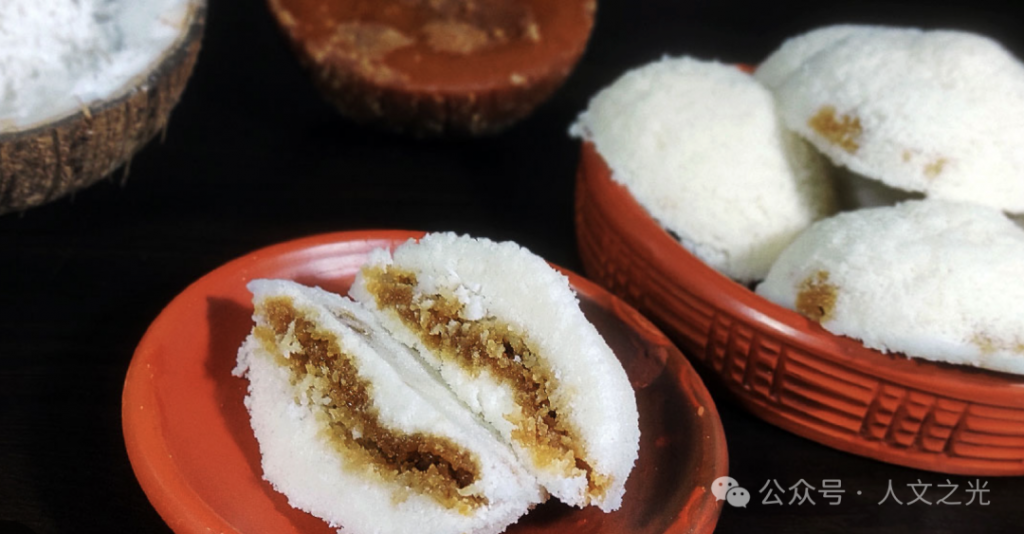
December nights are cold and dark, yet a warm glow of hearth fire emanates from the kitchen outside the house. The tempting aroma of rice flour, molasses, and grated coconut mingles in the air. Housewives gather to make various types of Pitha—such as Vapa, Patishapta, Andosha, Rosher Pitha, and more; the fire in the earthen stove dispels the chill and brings them warmth. Other family members, wearing sweaters and wrapped in shawls against the winter night’s cold, sit outside chatting while waiting for the freshly made Pitha. This is the most common and familiar scene in rural Bangladeshi households on December nights.
Patishapta
Every December, most schools and other government and public institutions are closed or temporarily shut due to winter vacations. City dwellers also tend to return to their rural hometowns during this month.
Although December does not have many major festivals, the arrival of winter break still brings a strong festive atmosphere. When the whole family gathers at their ancestral village home, the household is filled with a celebratory spirit. Making Pitha is a long-standing tradition in Bangladesh, deeply connected to local winter culture. People generally do not make Pitha all year round, so this food carries a unique seasonal flavour.
Vapa
One of the main ingredients of Pitha is molasses made from the sap of date palm trees collected in winter. On winter mornings, drinking the chilled sap freshly collected from date palm trees is one of the most iconic scenes of Bangladeshi winter life. Amid the morning mist, having a glass of fresh date palm sap is something of an unwritten tradition of December. In the early morning, one can often see children gathering around date palm trees, waiting to taste this fresh sap. For those who dare to rise early and step outside on a shivering winter morning, it is a special treat that belongs to the morning hours.
Among all the delicious foods, nothing surpasses Pitha made by grandma using winter molasses. These seemingly humble foods, shared with loved ones in the hometown that is rooted deep in our lives, are precisely what make them most special and unforgettable.
(This article comes from the “Friendly lernbereite Настоящие සුහදශීලී friends group,” a partner organisation of UHHC, authored by Opy, from Bangladesh. Edited by Peter Tian of the UHHC Operations Office. The accompanying images are sourced from the internet; if any infringement exists, we will remove them immediately. All copyrights belong to the author. In the event of infringement, UHHC and the author will pursue legal liability to the fullest extent.)

About Us
The Union of Humanities and History Clubs (UHHC) is an international high school student organisation focused on the humanities—history, literature, art, philosophy, and related interdisciplinary applications (such as economics, business, law, humanities AI, etc.). The alliance currently consists of 12 student clubs and 35 independent members, spanning 14 cities across China (Beijing, Shenzhen, Shanghai, Nanjing, Huizhou, Hong Kong, Shenyang, Dongguan, Nanchang, Qingdao, Zhangjiagang, Xiamen, Hangzhou, Tongling), as well as Diamond Bar, California (USA), Newton Township, Pennsylvania (USA), and Toronto, Canada, covering 36 secondary schools.
We believe that the humanistic spirit belongs not only to the great civilizations of the past, but also should shine brightly in the contemporary era. In an age of rapid technological advancement, we hope to inherit and promote the beauty of humanism through intellectual exchange, academic exploration, and cultural practice—so that more people may feel the power of the humanities and join us in exploring the depth and breadth of this world.
For more information, please visit our website: http://www.uhhc.com.cn