
Standing before this 600-meter epic spanning time and space is like stepping into a parallel universe forged of gold dust, cinnabar, and lapis lazuli. Over four hundred master painters, blending devotion with pigment, channeled millennia of esoteric traditions to conjure upon pristine canvas the soul-map of Snow Land civilization—from the primordial surge of the Tethys Ocean to the Twelve Nidānas chain swirling at the Buddha’s fingertips; from the celestial ladder descending with Nyatri Tsenpo, the “Shoulder-Seated King,” to the turquoise seal gleaming in Songtsen Gampo’s hand; from the karmic flames spewed by the Three Poisons in the Wheel of Rebirth to the healing coolness radiating from Bhaiṣajyaguru’s lapis lazuli mandala; from the ice-demon fortress shattered by King Gesar’s steed to Maitreya’s majestic smile overlooking an eighty-thousand-year era… This *Colored Drawing Panorama* distills the essence of Tibetan civilization through ten thousand scenes and a thousand tales within its monumental scroll.
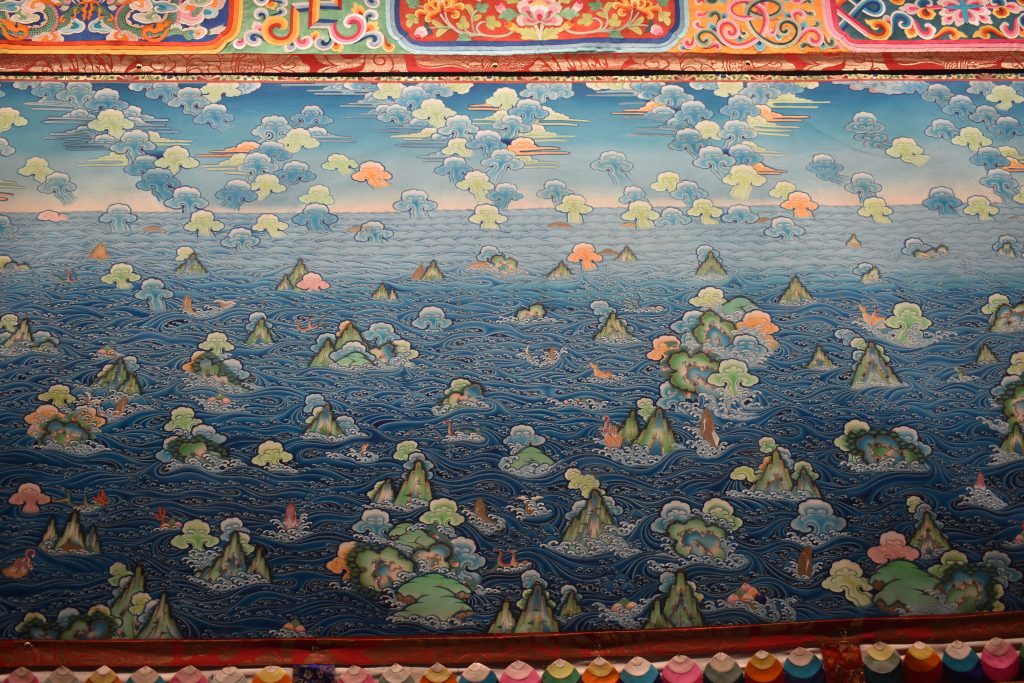
At daybreak, as light pierces Kangrinboqê’s snow-crown, the master painter dips his brush into the first drop of liquid gold. Gold powder swirls in yak-bone glue like the churning chaos-sea of creation. Gazing at the blank canvas, he sees the waves of the ancient Tethys—for Tibetans believe the world began in boundless ocean. When blazing sun evaporated the waters, or floods receded, eggs symbolizing light and darkness emerged from the exposed lakebed. The light-egg burst forth Chujiamjie, Mother of All Beings, whose breasts dripped into the Yarlung Tsangpo; from the dark-egg crawled the Ancestor of Darkness. In their mingling blood-rain, humans and gods opened their eyes simultaneously.
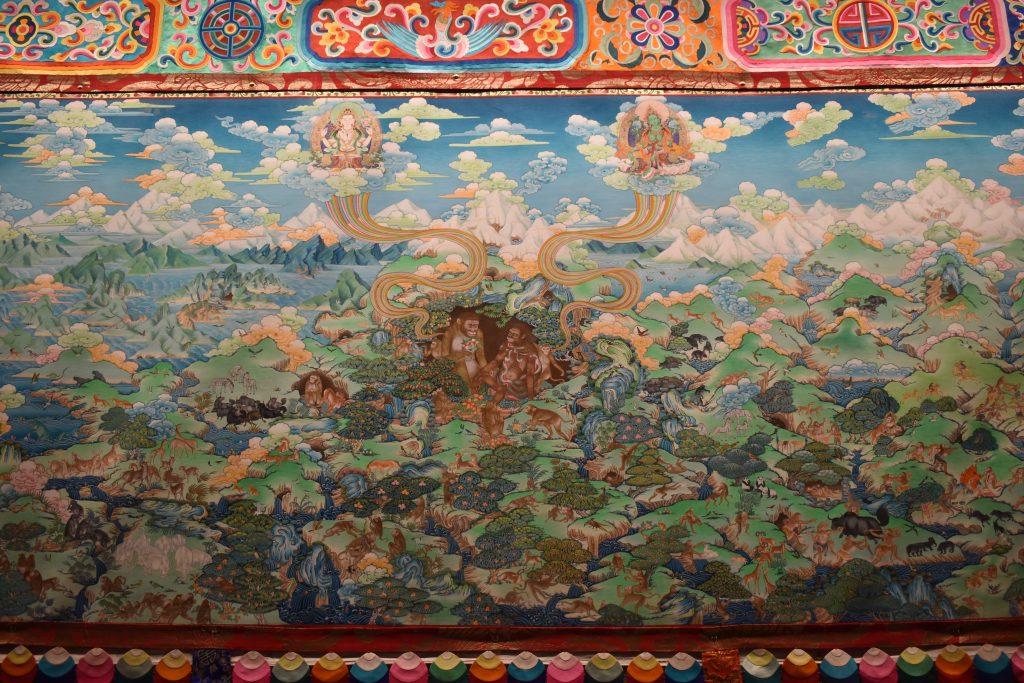
The painter’s brush shifts, sketching in the corner Avalokiteśvara’s destined pair—a monkey and a rock ogress—uniting in Yarlung Valley. Their grain-eating descendants shed fur and shrank tails, clearing throats as Tibet’s ancestors emerged from forests.
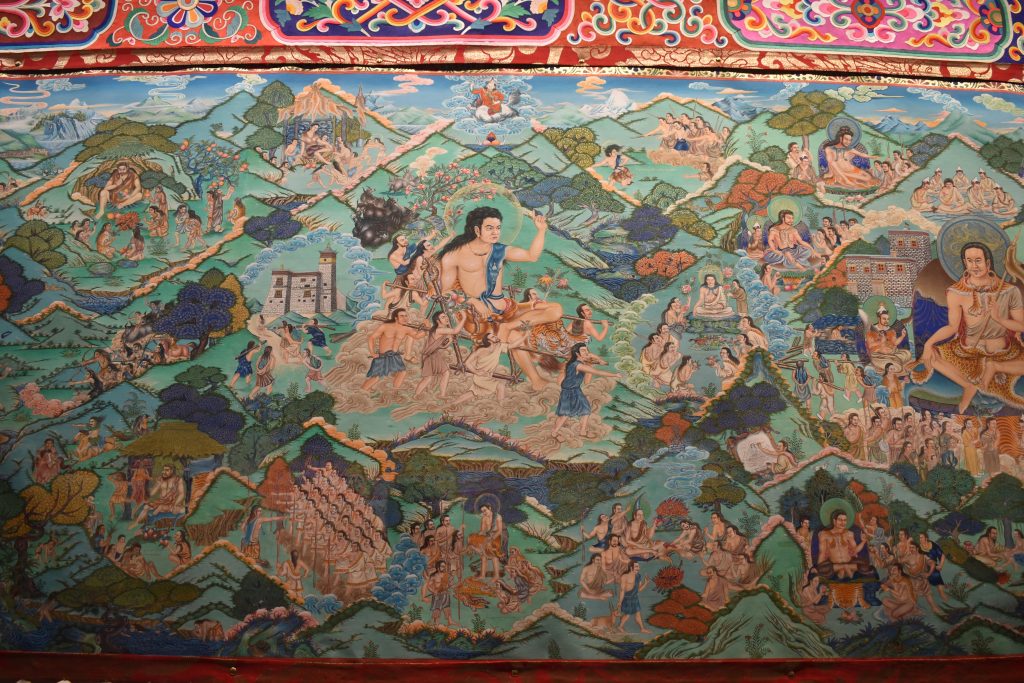
Silver powder frosts the palette as Nyatri Tsenpo descends in dawn-light—this “Shoulder-Seated King” borne by herdsmen, his celestial cord unfurling into Yarlung Valley to raise Yumbulagang, Tibet’s first castle.
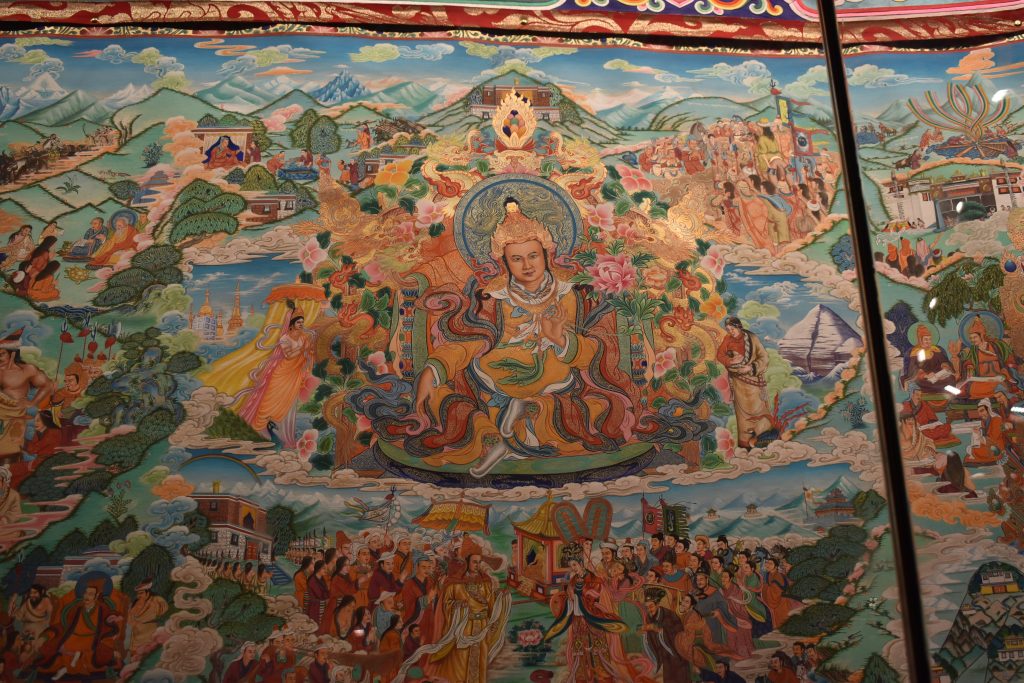
When the brush sweeps across seventh-century Red Hill, Songtsen Gampo lifts his turquoise seal: Potala Palace ascends over Lhasa Valley; Thonmi Sambhoṭa’s bamboo pen births thirty letters; Princess Wencheng’s gift—Śākyamuni’s twelve-year-old Jowo—enshrined beneath Jokhang Temple’s golden roof.
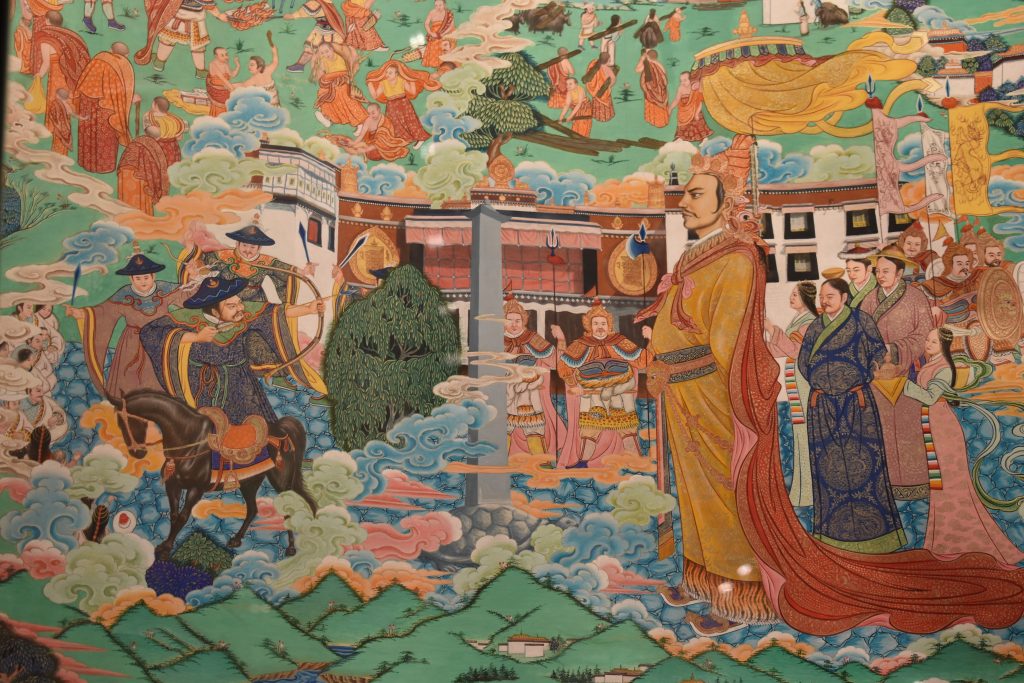
Then ninth-century canvas darkens abruptly. Amid Langdarma’s hurricane of torn prayer flags, the celestial cord snaps, crowns fall. An assassin’s arrow pierces not just the king’s brow, but the 200-year Tibetan Empire itself.
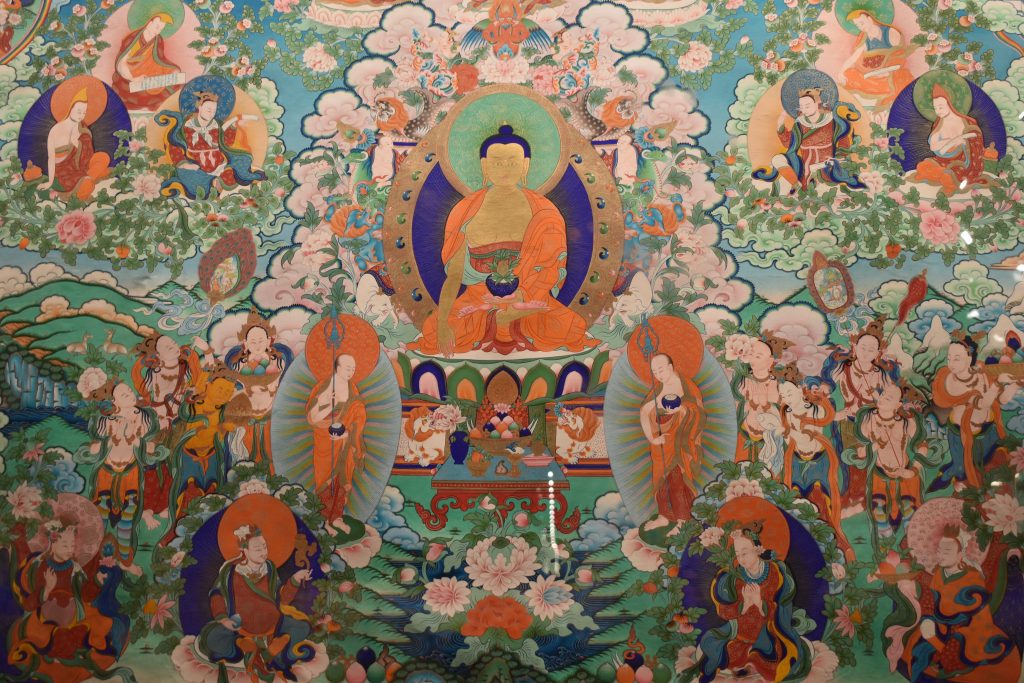
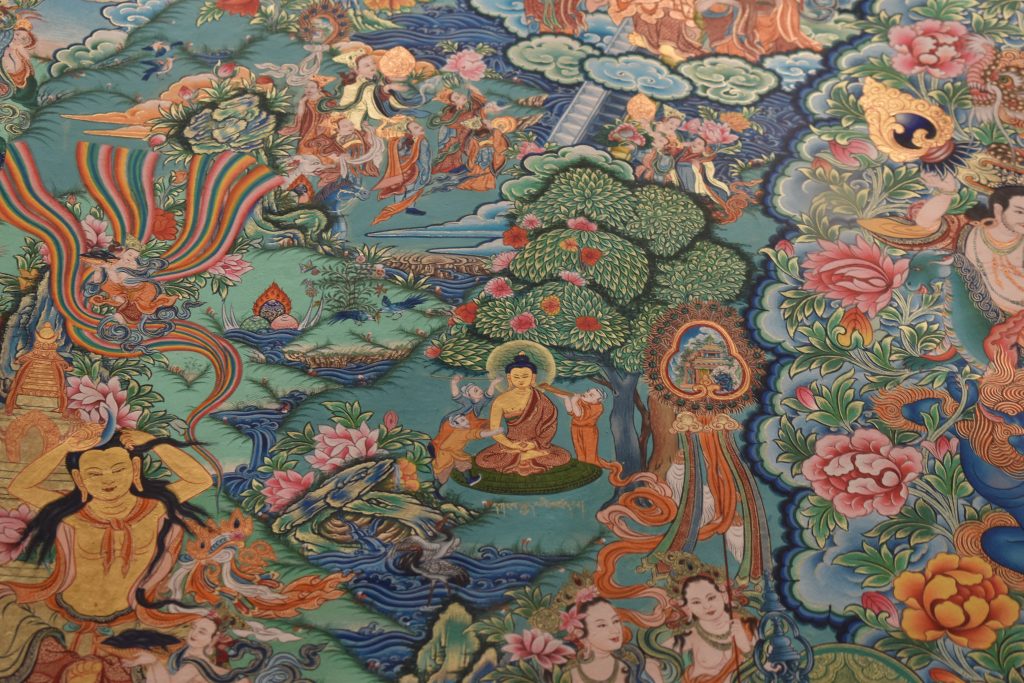
Golden rivulets trace the Buddha’s path. Before the painter’s eyes blooms Lumbinī’s sacred tree: Queen Māyā dreams of a white elephant entering her womb; the prince takes seven lotus-born steps at birth, right hand raised declaring *”In heaven and earth, I alone am the honored one.”* He meticulously renders Siddhārtha’s Four Gates revelation—east gate’s claw-handed elder, south gate’s plague-rotted figure, west gate’s corpse-carrying procession, north gate’s lightning-eyed ascetic. As the padded-hoofed steed Kanthaka departs at midnight, the brushstrokes turn fierce: beneath the Bodhi tree, the ascetic endures austerities while demonic arrows transform into mandala-blossom rain. At Venus’ rising, the Buddha perceives the Twelve Nidānas chain—ignorance ignites karma’s fire, forging Samsāra’s wheel.
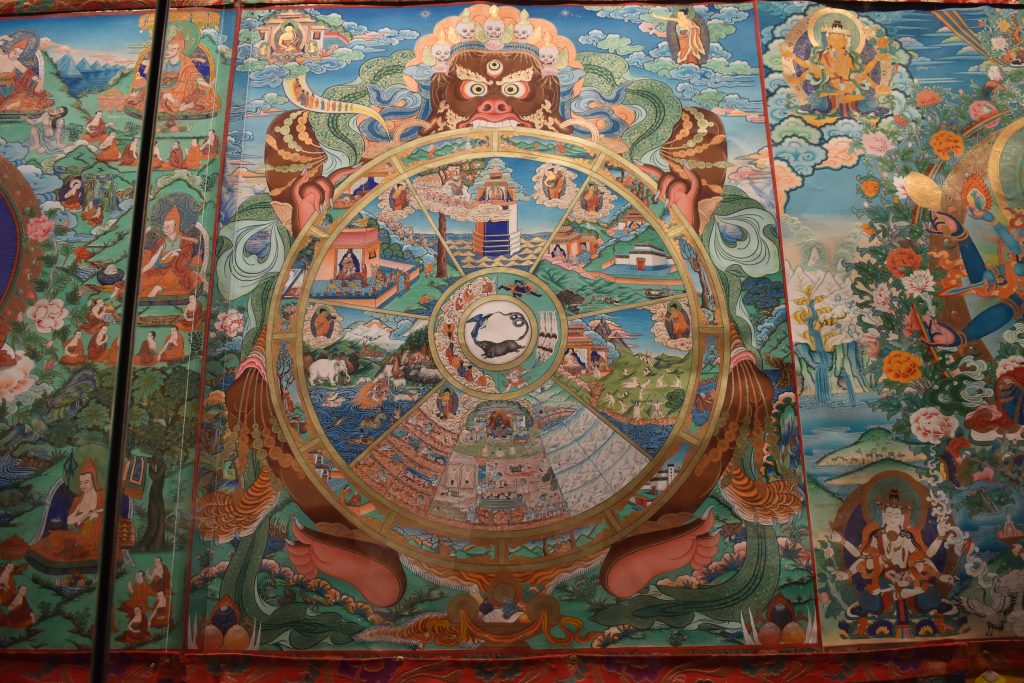
Cinnabar floods the canvas into a blood-sea. The painter outlines Yama Dharmaraja’s fanged Wheel of Rebirth. Hell-realm’s frozen tongues ice-over; hungry ghosts’ needle-throats thirst for millennia; livestock weep bloody tears at slaughter; Asuras’ severed limbs regenerate in crimson seas; humans shriek through stillbirth agonies; gods watch garlands wilt like falling stars. Beyond the wheel, Twelve Nidānas devour themselves like ouroboric serpents, while greed (dove), hatred (snake), and delusion (boar) spew flames at its core.
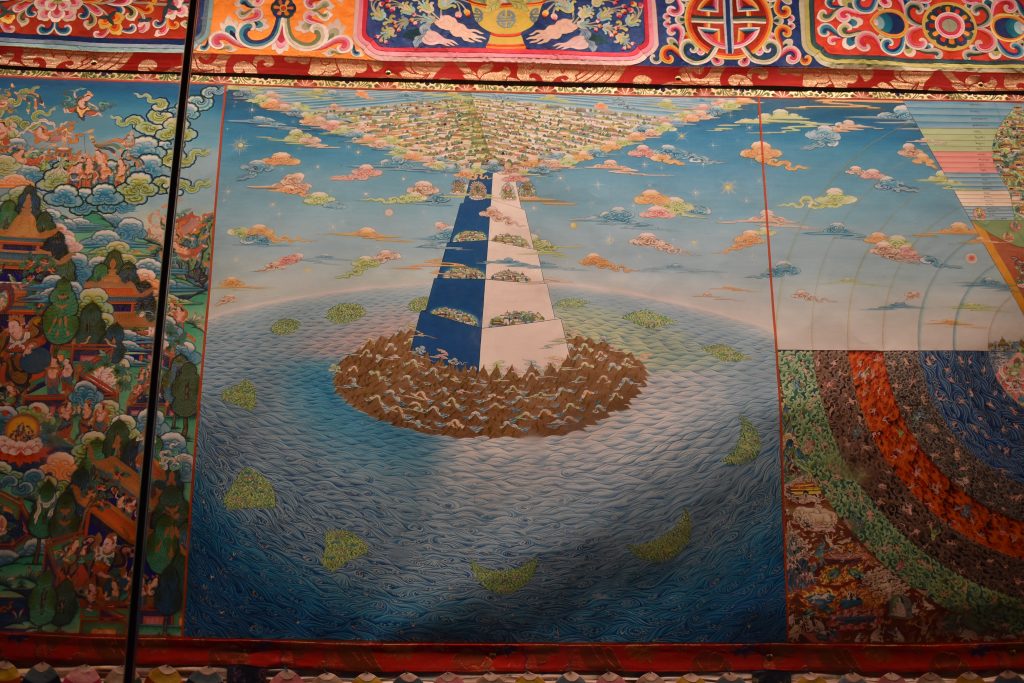
Mount Meru ascends canvas-center. Gold threads coil into four continents: moon-shaped Purvavideha’s fertile east; Aparagodānīya’s cattle-resting golden sands west; cube-like Uttarakuru north; and Jambudvīpa’s Kangrinboqê south—Bönpo’s ninefold sky-ladder, Buddhism’s cosmic axis, Shiva’s abode—its snow-peak mirroring Lake Manasarovar as three thousand worlds converge. Four Heavenly Kings guard mid-slopes; Thirty-Three Devas’ lapis-columned palaces crown the summit where Indra hears Buddha expound the *Kālacakra Tantra*. Silver powder charts star-trajectories: twelve zodiacs and twenty-seven constellations align with human meridians, each breath’s rhythm echoing cosmic cadence. Samye Monastery’s astrological chart reveals extraordinary precision in the ecliptic’s tilt.
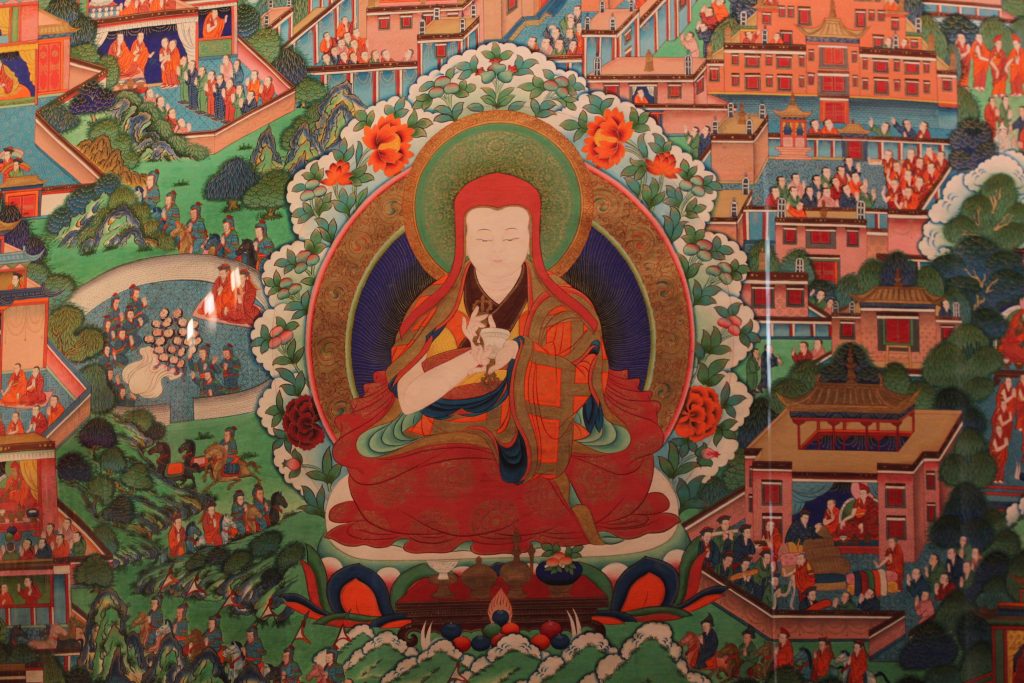
Lapis lazuli ripples in the palette. The painter recalls Sakya Monastery’s gray-white-red scripture walls—a politico-religious icon built by Phagpa for Kublai Khan. Sutras stack into thick ramparts; yak-blood-tinted cinnabar paints the *Thirty-Five Buddhas* mural. In 1265, Sakya leader Phagpa created Mongolian script, his golden seal proclaiming “Imperial Preceptor and Precious Dharma King,” as the theocracy’s wheel rolled across the snow-land.
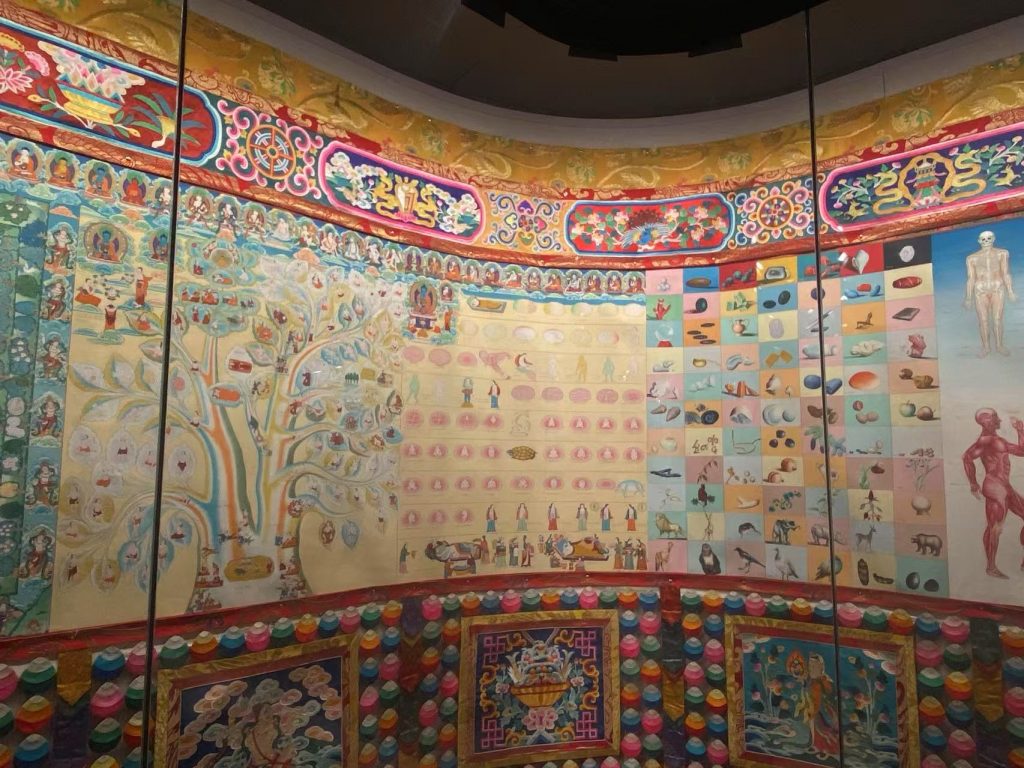
Turquoise-infused pigment grows across canvas into Tibetan medicine’s *Four Tantras* Tree of Life: roots split into three veins—cold disorders hang like icicles, heat ailments flare like flames, balanced roots anchor the void. Three branches (body, symptom, cure) sprout 710 medicinal leaves, bearing 1,200 ripened prescriptions. Its shadow falls on a human skeleton—spine soaring like Meru, heart radiating wisdom chakras. Ochre dots depict urine-diagnosis charts: crab-claw bubbles signal kidney failure; cloud-like sediment denotes cold syndrome. Ninth-century Dunhuang scrolls record Tibetan medicine’s unique diagnostics through urine tasting.
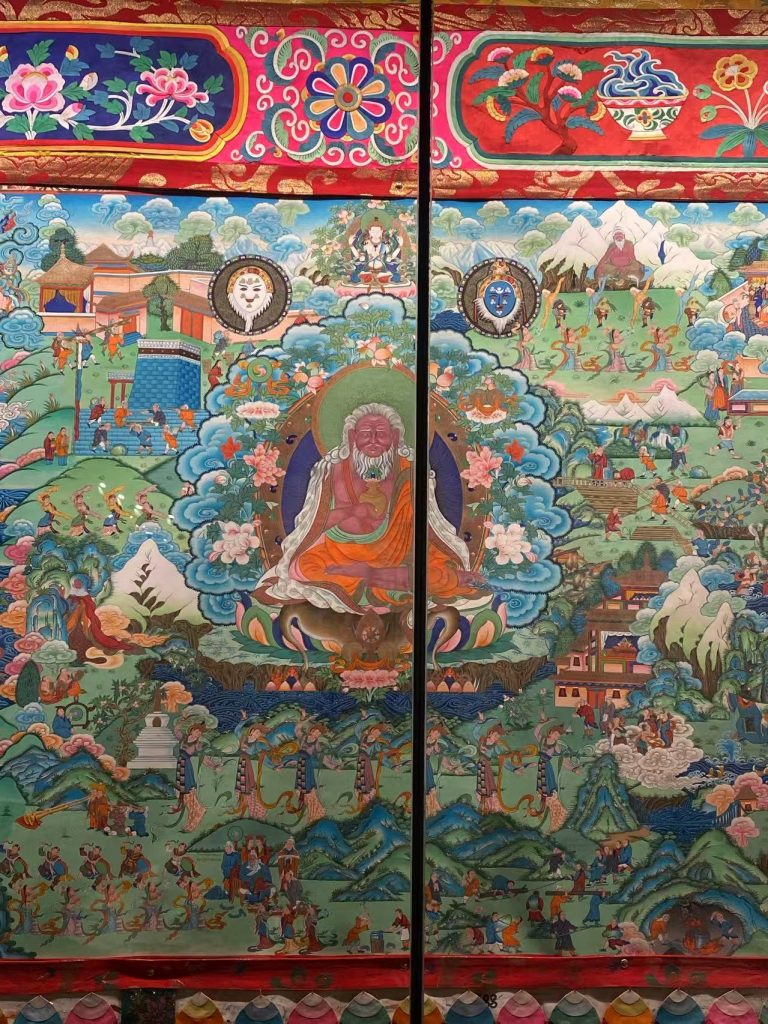
Gold powder boils anew. The brush traces Tangtong Gyalpo’s white beard in void—this fourteenth-century “Iron Bridge Living Buddha” led the Seven Sisters Opera Troupe across the plateau, suspending chain bridges like rainbows over the Yarlung Tsangpo. To blue-mask opera’s drums, he refined Tibetan medicine, creating the lost Red Pill and enduring White Pill (Dkarpo Chigthub).
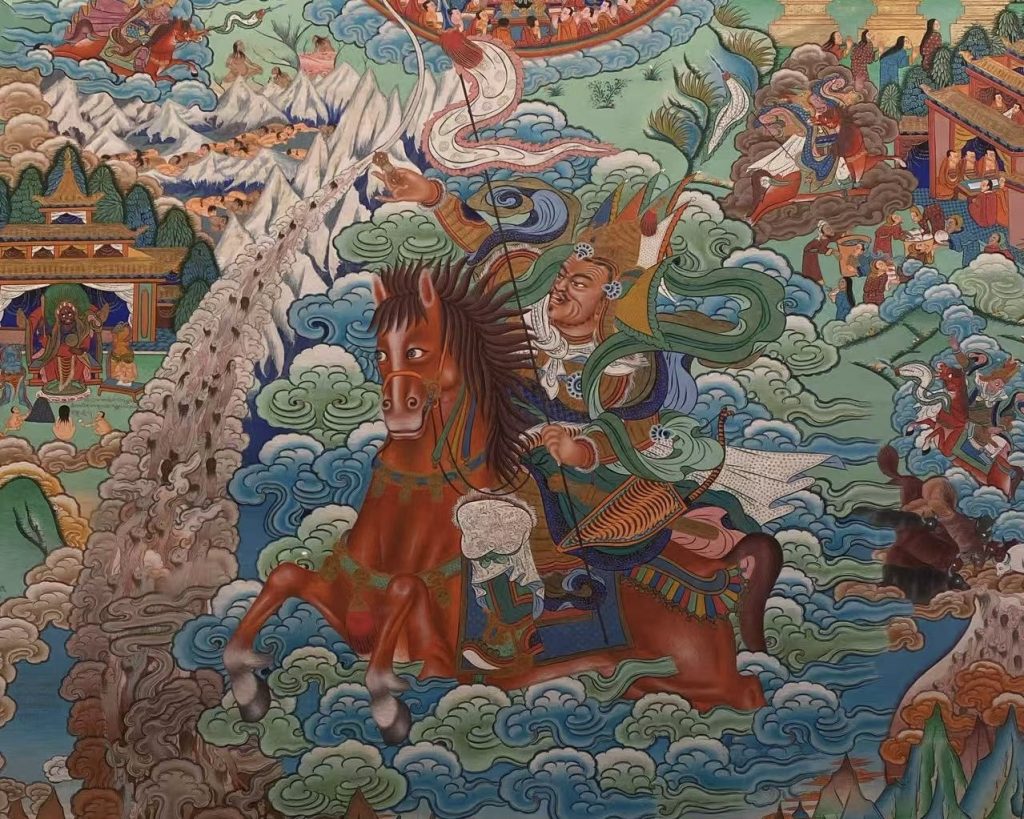
At nightfall, the painter lights a butter lamp. In its glow appears King Gesar’s steed, hoofprints crushing demon Lutsän’s ice-fortress. The world’s longest epic blazes in Thangka artists’ eyes: Padmasambhava’s shepherd-incarnation Joru wins the horse-race crown, conquering ice-demons north, salt-lakes east, building Lingkar—a beggar-less golden realm embraced by snow peaks.
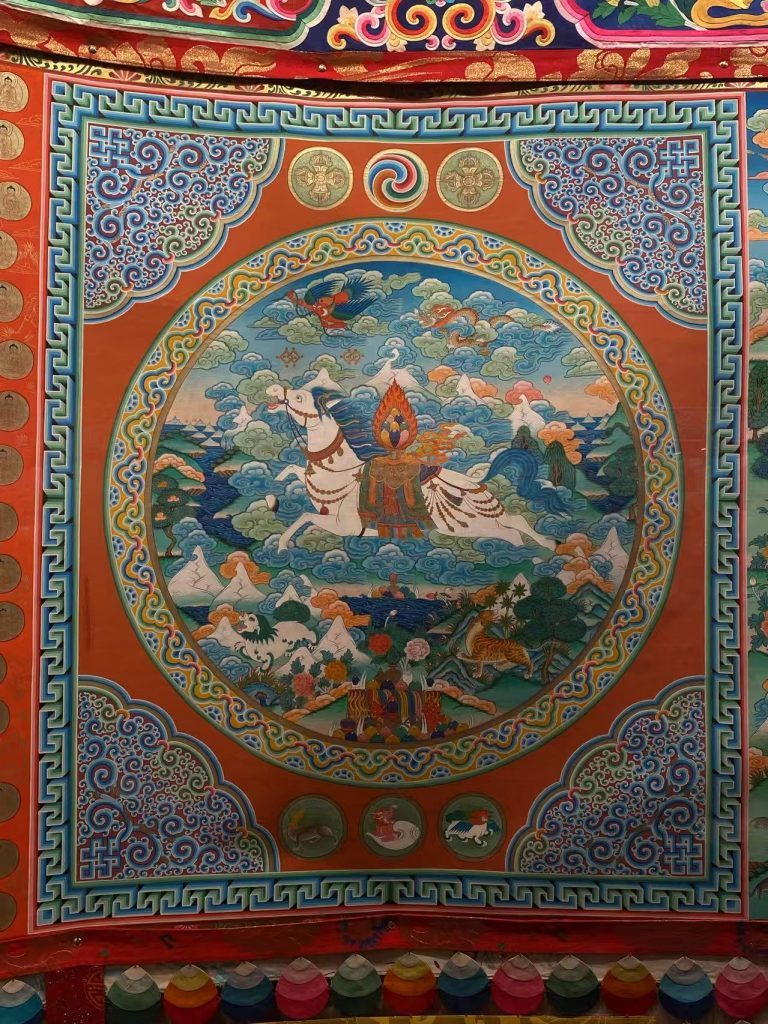
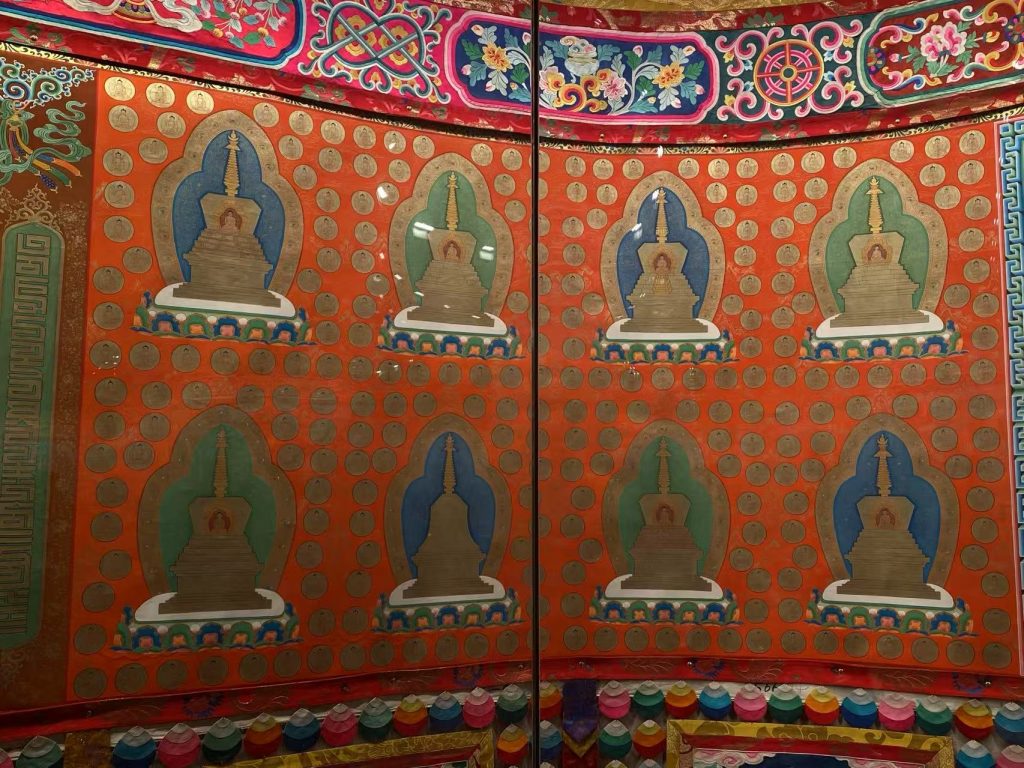
Gold thread embroiders saddle-mounted Wind-Horse, treasure-laden steed flaming at its hooves. Eight Stupas pierce spacetime: from Lumbinī’s lotus-birth Pagoda to Kuśinagara’s twin-tree Nirvana Stupa—Buddha’s footsteps crystallized as eight beacons.
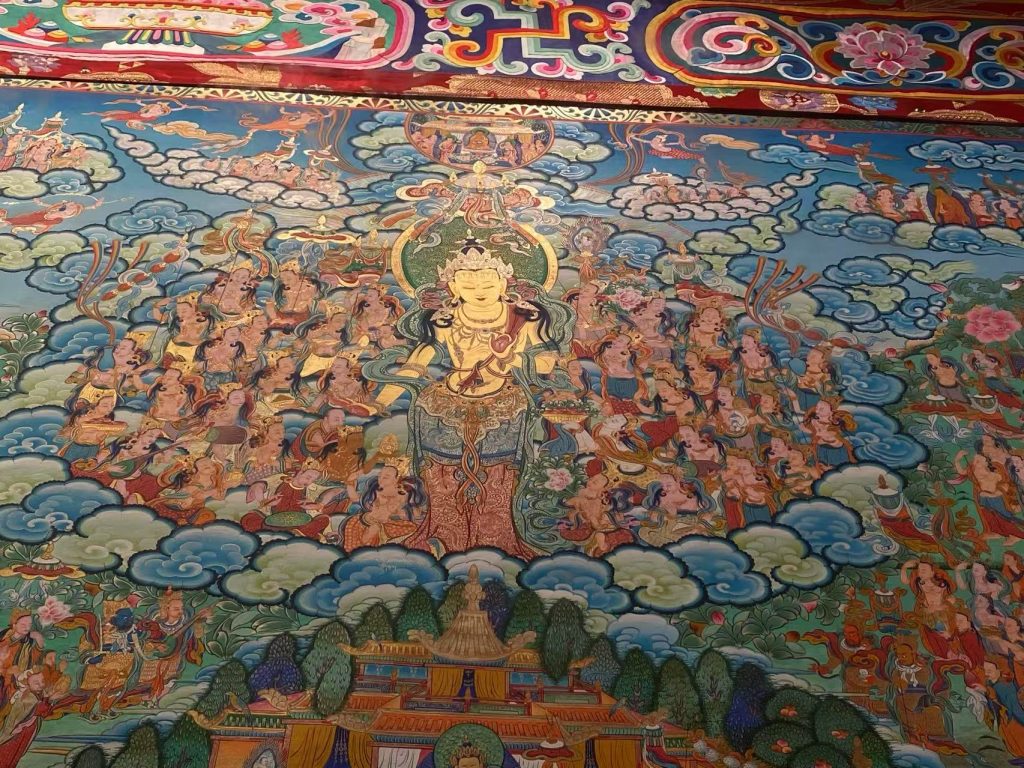
Moonlight floods the window, illuminating Maitreya’s unfinished golden form. Gold leaf shapes his majestic smile—when humans live 80,000 years, Maitreya will preach thrice beneath the Nāga tree. Fragrant rice sprouts from earth; trees yield silken robes; 9.2 billion beings attain liberation. At Tashilhunpo Monastery’s Thangka Unveiling Festival, a thirty-meter Maitreya gazes upon multitudes. Amid prayer-flag tides, the master painter lays down his final stroke.
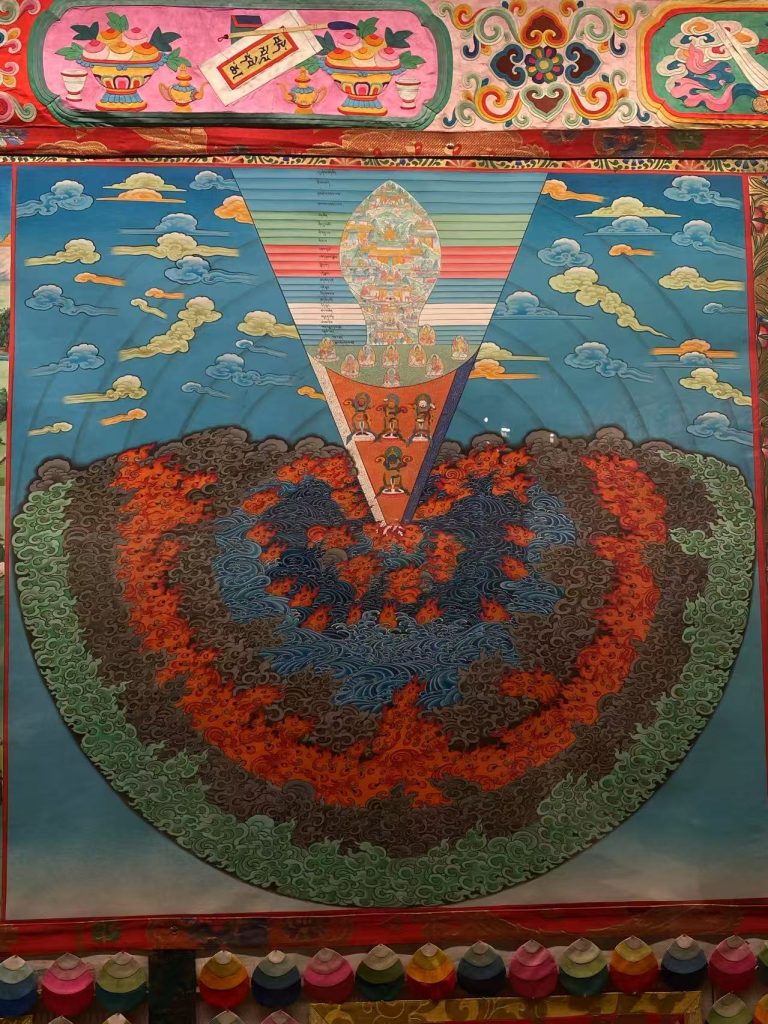
Dawn approaches. First light penetrates the *Earth Element Diagram*’s four oceans: wind-wheel spins primordial force; water-wheel bears nine mountains and eight seas; deep within earth-wheel, crystal and lapis refract the first sunbeam. On the easel, a Thangka awakens—Bhaiṣajyaguru’s lapis light pierces Samsāra’s flames; King Gesar’s hoofbeats echo through stellar orbits; and deep within human bones, a medical Thangka tree bears fruit to heal the Dharma-Ending Age.
Minerals and flora resurrect as cosmos on canvas; hells to buddha-fields measured in light-years within silk borders; tantric stars revolve in precise kālacakra orbits. As countless such “portable monasteries” scatter across Earth, Thangkas become humanity’s contour lines drawn upon spacetime—eternity crystallized between gold dust and cinnabar, within the silence of nirvana and the sighs of Samsāra.